Maureen Lissade

teen exercising hunting wellness blog scoliosis

A Little Curve, A Lot of Strength

My Daughter Was Just Diagnosed With Mild Scoliosis: What I’m Learning as a Mom and Personal Trainer The diagnosis caught me off guard. As a personal trainer, I spend a lot of time talking about posture, movement, core strength, mobility, and taking care of your body. I work with people of all ages and have seen firsthand how much the body can adapt when we give it the right tools. So when my daughter was diagnosed with mild scoliosis, my first reaction was not as a trainer. It was as a mom. I worried. What caused it? Will it get worse? Will she have back pain? Will this affect her as an adult? Does she need to stop doing certain exercises? Could I have noticed it sooner? And then I did what I always tell my clients to do when something changes with their health: Get the facts before you panic. So, What Exactly Is Scoliosis? Scoliosis is a three-dimensional spinal condition in which the spine develops an abnormal sideways curvature, often creating a curve that looks somewhat like a “C” or “S.” A diagnosis of scoliosis generally means the spinal curve measures at least 10 degrees using the Cobb angle on an X-ray. When scoliosis develops during adolescence without another identifiable underlying cause, it is commonly called adolescent idiopathic scoliosis (AIS). And that word idiopathic is important. It basically means: We don’t know exactly why it happened. AIS is the most common form of scoliosis and typically occurs between the ages of 10 and 18. It can affect children who appear completely healthy and active, and many parents don’t discover it until adolescence. It is not necessarily something you caused. This is one of the first things I had to remind myself. Scoliosis is not simply the result of bad posture, carrying a heavy backpack, sitting too much, or not exercising enough. A heavy backpack isn’t considered a cause of scoliosis or something that makes the curvature worse. Researchers believe genetics and several biological factors may play a role, but there isn’t one simple explanation for why one teenager develops scoliosis while another doesn’t. That uncertainty can be frustrating for parents. But it also means we shouldn’t blame ourselves. Why Adolescence Matters So Much. One of the biggest reasons scoliosis is monitored carefully during adolescence is growth. The teenage years can bring incredibly rapid changes to the skeleton. During periods of rapid growth, an existing spinal curve can progress. Once a child reaches skeletal maturity, the risk of significant progression generally decreases substantially. However, larger curves—particularly curves over about 60 degrees—can continue to progress during adulthood. That’s why the number on the X-ray isn’t the only thing doctors consider. They also look at things such as: How large the curve is Where the curve is located Whether there are one or multiple curves How much skeletal growth remains How quickly the curve is changing The child’s overall development In other words, a mild curve in a teenager isn’t automatically a lifelong problem. But it does deserve attention. What Happens If Mild Scoliosis Is Found? This is where I think parents can easily become frightened unnecessarily. Hearing the word scoliosis can make you immediately think: Brace. Surgery. Spinal fusion. But that’s not the reality for every child. For smaller curves, doctors may simply recommend observation and periodic X-rays to determine whether the curve is changing as the child grows. The Scoliosis Research Society generally describes observation as appropriate for curves below approximately 25–30 degrees, depending on the individual situation. For some adolescents who are still growing and have larger curves, bracing may be recommended to reduce the risk of progression. Surgery is generally reserved for substantially larger curves or situations where there is a high risk of continued progression. So a diagnosis does not automatically mean that a teenager is headed for surgery. That distinction matters. Can Exercise Fix Scoliosis? Here’s where I want to be especially careful as a personal trainer. Exercise is valuable. But exercise should not be marketed as a magic cure for scoliosis. There is a difference between: Managing and supporting the bodyandstructurally correcting the spinal curve. Exercise can help an adolescent develop strength, coordination, balance, mobility, body awareness, and confidence. Physical activity is generally encouraged for children with scoliosis unless they have pain or their medical team has given them specific restrictions. The Scoliosis Research Society specifically notes that keeping the trunk strong is beneficial. But I am not going to tell my daughter that a few exercises will magically straighten her spine. That would be irresponsible. Instead, my goal is to help her build a strong, capable body around the spine she has. What I Plan to Do as Her Mom and Personal Trainer This is where my professional experience becomes useful—but also where I have to know my limits. I am her mom first. I’m not her scoliosis specialist. I want her care to be guided by her physician and, if recommended, a physical therapist who understands adolescent scoliosis. My role is to support that plan. 1. Build overall strength Strength training isn’t something I want her to fear because she has scoliosis. Quite the opposite. I want her to learn how to safely become strong. That may include appropriately selected movements involving: Squats and squat variations Hip-dominant movements Glute strengthening Core stabilization Upper-body pulling and pushing Carrying exercises when appropriate Balance and coordination General functional movement The exact exercises will depend on her individual curve, symptoms, movement patterns, medical recommendations, and physical maturity. There is no universal “scoliosis workout.” And anyone selling one probably needs to put the megaphone down. 2. Focus on core control—not endless crunches When I say “core,” I don’t mean doing 100 sit-ups. The core is much more than the abdominal muscles. I want to help her develop the ability to control her trunk while she moves her arms and legs. That can include exercises such as appropriately modified: Dead bugs Bird dogs Planks Side planks Anti-rotation exercises

A Little Curve, A Lot of Strength Read More »

Exercise, Wellness
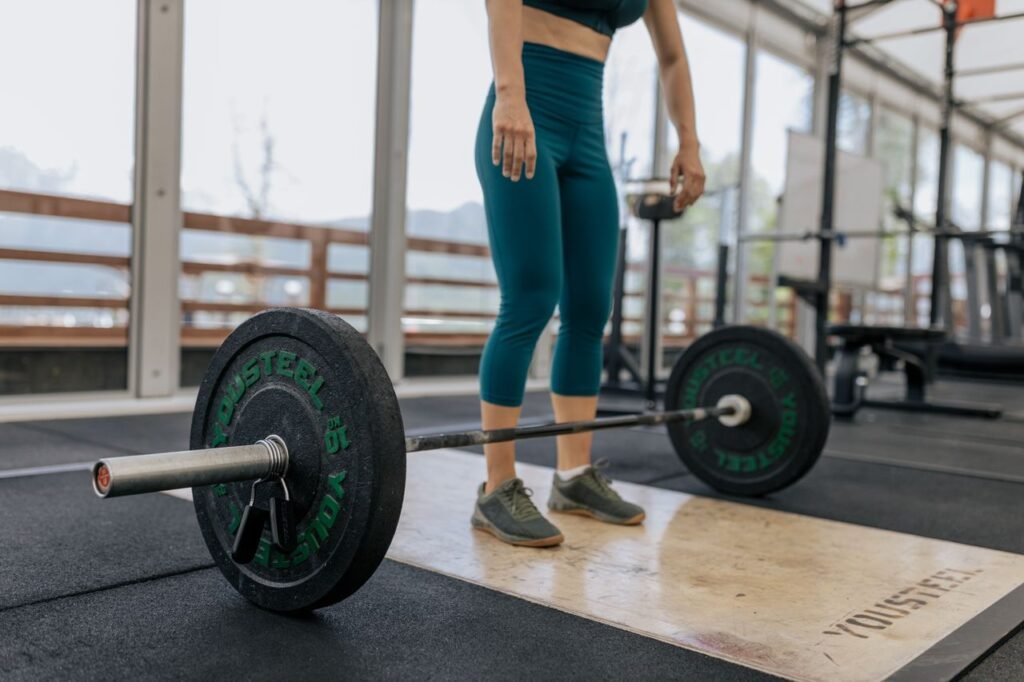

Female athlete preparing to lift a heavy barbell in a gym, showcasing fitness and strength.

Know Your Gym Tools: The Barbell

There’s something about the barbell area of the gym that can feel intimidating. Maybe it’s the clanging plates, the squat racks lined up against the wall, or the lifters who seem to know exactly what they’re doing. For many beginners, the barbell section can feel like a place reserved for “serious” gym-goers. I get it. I’ve been there too. The truth is, the barbell isn’t just for powerlifters, athletes, or the strongest person in the gym. It’s one of the most versatile and effective training tools ever created, and learning how to use it can completely change the way you approach strength training. My goal with this series is to help you understand the equipment around you so that the gym feels less intimidating and a lot more welcoming. The barbell is one of the most powerful tools in strength training — and also one of the most intimidating for beginners. If you’ve ever thought barbells were only for advanced lifters or powerlifters, this guide will show you what they are, how they work, and why beginners should learn them early. Because confidence in the gym starts with understanding. What Is a Barbell? I still remember how intimidating the barbell area felt when I first started going to the gym. There was something about the racks, the plates, and the people lifting heavy weights that made it seem like I wasn’t experienced enough to be there. But the truth is, a barbell is simply a long metal bar designed to hold weight plates, and it’s one of the most effective tools for building strength. What I love about barbells is that they grow with you. Whether you’re learning your very first deadlift with an empty bar or adding weight as you get stronger, the barbell adapts to your fitness level. It allows you to train fundamental movements like squats, presses, rows, and deadlifts while teaching your body to move with strength, balance, and coordination. Once you realize that the barbell isn’t reserved for the strongest people in the gym, but is actually a tool for anyone willing to learn, it becomes a lot less intimidating and a lot more empowering.  The brief history of the Barbell The barbell has been around for more than a century. Early versions appeared in the late 1800s and looked very different from the sleek steel bars we use today. Some of the first barbells had hollow globes attached to each end that could be filled with sand or shot to change the weight. Strongmen used them in traveling shows and competitions to demonstrate incredible feats of strength. As the fitness industry evolved, so did the barbell. Manufacturers standardized the size, weight, and design, creating the barbells we see in gyms today. Despite all the new fitness trends and high-tech machines, the barbell has remained one of the most effective tools for building strength, muscle, and confidence. Why Beginners Should Learn the Barbell I know what some of you are thinking: “That thing weighs forty-five pounds before I even add plates!” And yes, the standard Olympic barbell weighs 45 pounds (20 kilograms). That can feel heavy at first, but here’s something important to remember: starting light is not a sign of weakness. Learning proper technique is what sets you up for long-term success. What I love about barbells is that they teach your body to move as one connected system. Instead of isolating a single muscle, barbell exercises challenge your legs, core, back, and upper body to work together. They teach balance, coordination, and strength in a way that few other pieces of equipment can. More importantly, they teach confidence. There’s something incredibly empowering about walking into the gym, setting up your bar, and realizing, “I know how to do this.” Not all Barbells are the same One of the biggest surprises for many beginners is learning that there isn’t just one type of barbell. The most common is the Olympic barbell, which weighs 45 pounds and is used for exercises like squats, deadlifts, bench presses, and overhead presses. Many gyms also have a women’s Olympic barbell, which weighs 33 pounds (15 kilograms) and has a slightly smaller diameter, making it easier to grip  for people with smaller hands. If you’re just starting out, your gym may also have technique bars, which weigh anywhere from 5 to 15 pounds. These bars are fantastic for practicing movement patterns without worrying about the weight. Then there are the specialty bars. The EZ curl bar, with its zigzag shape, is commonly used for arm exercises because it puts less stress on the wrists. The trap bar, or hex bar, allows you to stand inside it and often feels more comfortable for deadlifts. The safety squat bar, recognizable by its padded shoulder supports and handles, helps people squat with less strain on their shoulders. Using a lighter bar or a different bar isn’t cheating—it’s simply choosing the right tool for the job. Where to Find Barbells in the Gym If you’re not sure where the barbells are, don’t worry—you’re definitely not the only one. In most gyms, you’ll find them near the squat racks, power cages, bench press stations, and deadlift platforms. The first time you walk into that area, it can feel like everyone knows some secret set of rules. Here’s the truth: they don’t. Every experienced lifter started exactly where you are now, wondering which rack to use and whether they were setting things up correctly. Don’t be afraid to ask questions. That’s how confidence is built. The Five Basic Movement Patterns One of the reasons barbells are so effective is that they can train all five foundational movement patterns. The hinge pattern includes exercises like deadlifts and Romanian deadlifts, which strengthen your glutes and hamstrings. The squat pattern includes back squats and front squats, helping you build lower-body strength and stability. For the push pattern, exercises like the bench press and overhead press develop upper-body power. The pull pattern, including bent-over rows, strengthens your back

Know Your Gym Tools: The Barbell Read More »

Exercise
woman, runner, sport, running, run, exercise, athlete, race, marathon, active, competition, sprint, runner, runner, runner, runner, runner, marathon, marathon, sprint

Train like an Athlete, not a Bodybuilder: A smarter way to lose weight

The other day I was scrolling through fitness content when I came across a phrase that immediately caught my attention:   “Train like an athlete, not a bodybuilder if you want to lose weight.”   Now, as a personal trainer who has spent years emphasizing strength training and building muscle, I found myself raising an eyebrow. Wait a minute. Haven’t we been telling people for years that building muscle is one of the best things you can do for fat loss? My own transformation journey involved strength training. I lost over 100 pounds, and lifting weights played a huge role in helping me build confidence, preserve muscle, and completely change my relationship with exercise. So naturally, I became curious. Was this just another catchy social media slogan? Or was there actually some science behind it? As any fitness nerd would do, I went down the research rabbit hole. What I discovered The first thing I learned is that the phrase itself can be a little misleading. The truth is that both bodybuilding-style training and athletic-style training can help with weight loss. The difference lies in what each style prioritizes. Bodybuilding focuses on developing individual muscles, maximizing muscle growth, and improving aesthetics. Athletic training focuses on movement, performance, power, conditioning, coordination, and overall physical capability. Think about it this way. A bodybuilder may ask: “How can I grow my quads?” An athlete may ask: “How can I run faster, jump higher, and move more efficiently?” Both are training hard. They’re simply training for different outcomes. What the Science says Research consistently shows that resistance training is extremely effective for preserving muscle during weight loss. This matters because when people lose weight through dieting alone, they often lose both fat and muscle. Muscle is metabolically active tissue and helps maintain strength, function, and overall body composition. But research also shows that higher levels of daily movement, conditioning work, and cardiovascular fitness are associated with greater calorie expenditure and improved long-term weight management. In other words: Building muscle is important. Moving more is important. Improving fitness is important. The most successful fat loss programs often combine all three. What intrigued me most was that athletic training naturally blends strength, conditioning, balance, mobility, and endurance into one package. You aren’t just training your muscles. You’re training your body. Moving more is important. Improving fitness is important. The most successful fat loss programs often combine all three. What intrigued me most was that athletic training naturally blends strength, conditioning, balance, mobility, and endurance into one package. You aren’t just training your muscles. You’re training your body. Bodybuilder vs Athlete: A Real-Life Example Imagine two workouts: Bodybuilder Workout Leg Press Leg Extension Hamstring Curl Calf Raises Seated Hip Abduction Nothing wrong with this workout. You’ll feel the burn. Your muscles will be challenged. You may build significant muscle over time.  Now compare the athlete’s workout Athlete Workout Goblet Squats Walking Lunges Farmer Carries Sled Pushes Kettlebell Swings Suddenly you’re using your entire body. Your heart rate climbs. Your core works harder. You’re producing force, controlling movement, and building fitness all at once. This is where athletic-style training becomes very appealing for weight loss. Sample Bodybuilding Routine If your goal is muscle growth and aesthetics: Lower Body Day Leg Press – 4 x 10 Leg Extension – 3 x 12 Romanian Deadlift – 4 x 10 Hamstring Curl – 3 x 12 Walking Lunges – 3 x 12 each leg Standing Calf Raise – 4 x 15 Rest 60–90 seconds between sets. Focus on muscle fatigue and progressive overload. Sample Athletic Routine If your goal is fat loss, conditioning, and overall fitness:   Athletic Circuit Perform 3-4 rounds. Goblet Squats – 10 reps Farmer Carry – 40 yards Push-Ups – 10 reps Walking Lunges – 20 steps Kettlebell Swings – 15 reps Battle Ropes – 30 seconds Rest 90 seconds between rounds. This type of workout challenges strength, endurance, cardiovascular fitness, coordination, and work capacity. You’ll likely be breathing much harder by the end. Here’s my conclusion after doing the research. Neither. And both. I know that’s not the sexy social media answer. But the reality is that your body doesn’t know whether you’re training like a bodybuilder or an athlete. It responds to stimulus. Bodybuilding is excellent for building muscle. Athletic training is excellent for improving movement and fitness. For most everyday people trying to lose weight, feel stronger, move better, and stay healthy as they age, a blend of both approaches may be the sweet spot. Build muscle. Challenge your heart. Move in multiple directions. Carry things. Lift things. Push things. Walk often. Repeat. My Takeaway As someone who spent years focused primarily on strength training, this topic reminded me that fitness isn’t just about how much weight we can lift. It’s about what our bodies can do. Can we climb stairs without getting winded? Can we carry groceries without our backs hurting? Can we play with our kids or grandkids without feeling exhausted? Can we move confidently through life?   Building muscle absolutely matters. But so does movement. So while I’m not giving up my dumbbells anytime soon, I’ve started incorporating more athletic-style training into my workouts. And honestly? It’s been fun. Because at the end of the day, fitness shouldn’t just help us look better. It should help us live better. Here’s my challenge to you: For the next 2 weeks, add one athletic-style workout to your routine. Keep lifting if you enjoy it, but focus on movements that make you squat, carry, push, pull, and move. Then ask yourself: Do I feel stronger? Do I have more energy? Am I moving through daily life with less effort? Weight loss is great. But feeling capable is even better. If you’re ready to build a body that looks good, moves well, and lasts, I’d love to help. Send me a message or contact me here and I’ll help you put together a simple athletic-style plan that fits your schedule and experience level. Contact me

Train like an Athlete, not a Bodybuilder: A smarter way to lose weight Read More »

Exercise

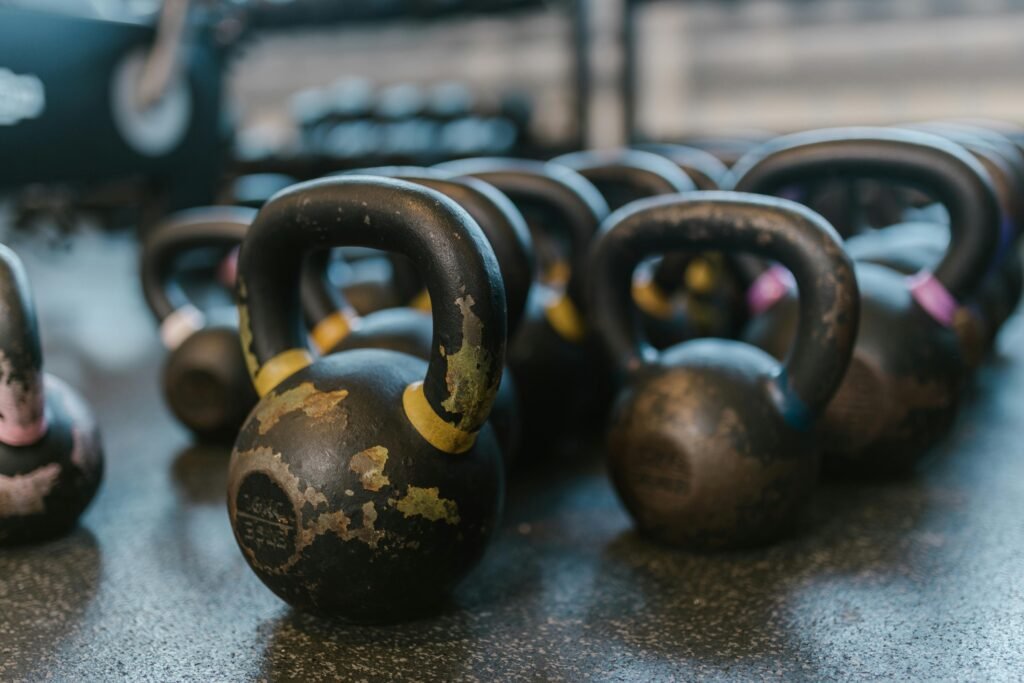
Know Your Gym Tools: The Kettlebell

(Beginner’s Guide to Strength, Confidence, and Results) Walk into any gym, and you’ll probably see them sitting in a corner, heavy, round, and slightly intimidating. The kettlebell is one of the most powerful and misunderstood tools in the gym. If you’ve ever wondered what it does, how to use it, or whether it’s “for you,” this guide will show you everything you need to know to use kettlebells safely and confidently. Understanding is the first step towards gaining confidence in the gym. https://www.youtube.com/shorts/0hUYhfu4ohc What Is a Kettlebell? A kettlebell is a cast-iron or steel weight with a handle. Unlike dumbbells, the weight sits below the handle, creating an offset center of gravity. That simple design forces your body to stabilize more, engage your core, and move more naturally. This makes kettlebells incredibly effective for building: Strength Stability Coordination Endurance Functional, real-life movement You don’t need to lift heavy to benefit. Proper technique is what delivers results. The Origin of the Kettlebell The kettlebell traces its roots back to 18th-century Russia, where it was originally used as a counterweight for weighing grain in markets. These cast-iron weights, known as “girya,” were common tools for farmers and merchants. Over time, people began lifting and swinging them to demonstrate strength and physical ability, turning a simple measuring device into a training tool. By the 19th century, kettlebells had become part of physical conditioning programs for athletes and the military in Russia. In other words, kettlebells were accidental strength training. Today, they’re widely used in strength programs, functional training, and competitive fitness environments like CrossFit Games, but they remain one of the best tools for beginners. Why Kettlebells Are Great for Beginners Kettlebells teach your body to move as a unit instead of isolating muscles one at a time. They improve: Core stability Grip strength Posture Balance and coordination Total-body strength Unlike machines that guide your movement, kettlebells teach your body how to control movement—which transfers directly to everyday activities. They’re simple, efficient, and highly effective. What Makes Kettlebells Different From Dumbbells What truly sets kettlebells apart from dumbbells is the offset center of gravity. With a kettlebell, the weight sits below the handle rather than evenly balanced in your hands. This small design difference changes how your body works during each movement. Because the load is positioned away from your hands, kettlebells require more core engagement, challenge your stability, and encourage better coordination throughout the entire body. They also allow for more fluid, dynamic movements, like swings and cleans, that are difficult to replicate with dumbbells. While dumbbells tend to feel more controlled and predictable, kettlebells require greater body awareness and control, making them an excellent tool for developing strength, balance, and movement quality. How Kettlebells Train the 5 Fundamental Movement Patterns https://www.youtube.com/shorts/_eOFaLkon28 A single kettlebell can train your entire body by targeting the five primary movement patterns. 1. Hinge Examples: Deadlifts, swings Builds glutes and hamstrings Teaches proper hip movement Protects the lower back when done correctly 2. Squat Example: Goblet squat Improves posture and depth Strengthens legs and core Beginner-friendly positioning 3. Push Examples: Overhead press, floor press Builds shoulder strength Improves stability and control   4. Pull Examples: Rows, high pulls Strengthens upper back Improves posture 5. Carry Examples: Suitcase carry, front rack carry Develops core strength and grip Enhances balance and stability One tool. Full-body training. Kettlebells may look simple, but they’re one of the most versatile and effective tools you’ll find in the gym. Whether you’re learning the basics of strength training or looking to improve stability, coordination, and full-body power, kettlebells can help you build a strong foundation. You don’t need to master every movement right away or lift heavy to benefit. Start with the fundamentals, focus on good technique, and give yourself time to learn. The more familiar you become with the tools around you, the more confident you’ll feel walking into the gym—and that confidence is where real progress begins.  If you’re ready to start training but aren’t sure where to begin, I’m here to help. Whether you want guidance on proper form, building a beginner-friendly workout routine, or simply gaining more confidence in the gym, feel free to reach out. I offer personal training and support designed to help you learn the fundamentals, train safely, and feel stronger every step of the way. You can contact me using the information below to ask questions or schedule a session—I’d be happy to help you get started. Contact me

Know Your Gym Tools: The Kettlebell Read More »

Exercise

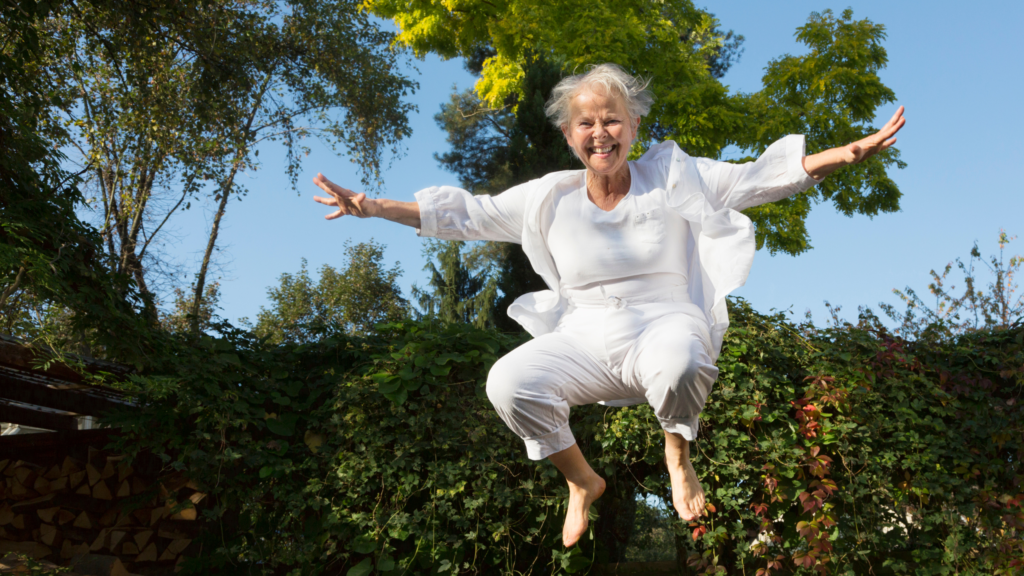
Jump Training: What is it and why you should do it (especially if you’re a woman in menopause)?

What happens to our bones as we age ? As we age, our bones slowly begin to lose density because the natural balance between bone breakdown and bone formation shifts—around midlife, especially after the age of about 50, bone resorption (breakdown) starts to outpace bone formation. Hopkins Medicine+2Bone Health & Osteoporosis Foundation+2 For women in particular, the transition through Menopause accelerates this loss sharply: with the decline in estrogen, women may lose on the order of 1.8-2.3% of bone mineral density per year at the spine and about 1-1.4% per year at the hip during the 5-10 years surrounding menopause. Menopause Facts+2UCLA Health+2 In fact, women can lose up to 10–12 % of bone density in the hip and spine across the menopausal transition and as much as 20 % or more in the first five to seven years following menopause. UCLA Health+3Bone Health & Osteoporosis Foundation+3Better Health Channel+3 Over the longer span of life, by age 80, women on average have lost about 30% of their peak bone mass. Australasian Menopause Society That means weaker structure, thinner bone walls, and larger internal “honeycombs” in the bone—all combining to raise the risk of osteopenia, then osteoporosis, and fractures. National Council on Aging+1 Understanding these numbers underscores why training the skeleton (heavy lifting, high-impact jumps, sprinting) and nutrition matter, especially for women in midlife. What you can do to help bone density—jump training One of the most effective and surprisingly simple ways to protect and even rebuild bone density is through jump training. Our bones respond to stress, and the impact from jumping sends a signal to your body to strengthen and fortify the skeletal structure. This process, called mechanical loading, stimulates bone-forming cells (osteoblasts) to increase bone mineral density, particularly in the hips and spine, the areas most vulnerable to age-related loss. Research shows that short bouts of high-impact exercise, such as 10 minutes of jumping three times per week, can significantly improve bone density, even in women with osteopenia.  You don’t need to perform extreme plyometrics; simple hops, jump squats, or small bounding movements on a firm surface are enough to get results. The key is consistency and progression. Start with gentle impact and gradually increase intensity as your strength and confidence grow. Over time, these small but powerful sessions can help you maintain strong, resilient bones that support you for decades. What happens to bones when continued stress is administered? Bones respond by becoming stronger and denser through a process known as bone remodeling. This process is guided by Wolff’s Law, which states that bone tissue adapts to the loads under which it is placed.  The mechanical stress stimulates specialized cells called osteocytes, which then signal osteoblasts (bone-building cells) to lay down new bone matrix and osteoclasts to resorb older or weaker bone tissue.  Over time, this coordinated activity increases bone mineral density and improves structural strength. Studies published in journals like Bone and the Journal of Applied Physiology have shown that regular high-impact or resistance exercise can increase bone density by 1–3% annually in adults, a meaningful gain, especially when offsetting the typical age-related loss. In essence, consistent mechanical stress teaches your bones to stay strong, functional, and fracture-resistant well into later life. Jump training can be incredibly beneficial, but it’s not suitable for everyone at least not right away. Here’s who should avoid or modify jump training until properly cleared or conditioned. People with joint pain or arthritis flare-ups: High-impact movements can aggravate knees, hips, or ankles that are already inflamed or unstable. Those with osteoporosis or severe osteopenia: While impact can improve bone density, jumping without proper supervision or foundational strength can increase fracture risk. Anyone recovering from injury or surgery: Especially if it involves the lower body, spine, or core — you need full strength, stability, and clearance from a medical professional first. Individuals with balance or coordination issues: Falls during jump training can cause more harm than good; stability work should come first. Beginners without strength training experience: Jumping should build on a foundation of strength — think of it as “level 2,” after you can squat, hinge, and land safely. In short: jump training is powerful when done right, but it should be progressive, controlled, and tailored to your current ability. For many people, that means starting with low-impact drills, learning proper landing mechanics, and building from there. Let’s work together ! As a Certified Personal Trainer, I can help you safely integrate jump training into your fitness plan, customizing the intensity, frequency, and type of movement to suit your current fitness level and goals. Whether you’re starting from scratch or looking to build on your existing routine, I’ll guide you through proper form, progression, and recovery to maximize benefits while minimizing risk. A few minutes of intentional, high-impact work each week can make a remarkable difference in your long-term strength, stability, and vitality. Your bones thrive on challenge.  Let’s build that strength together. Get Started

Jump Training: What is it and why you should do it (especially if you’re a woman in menopause)? Read More »

Exercise, Wellness

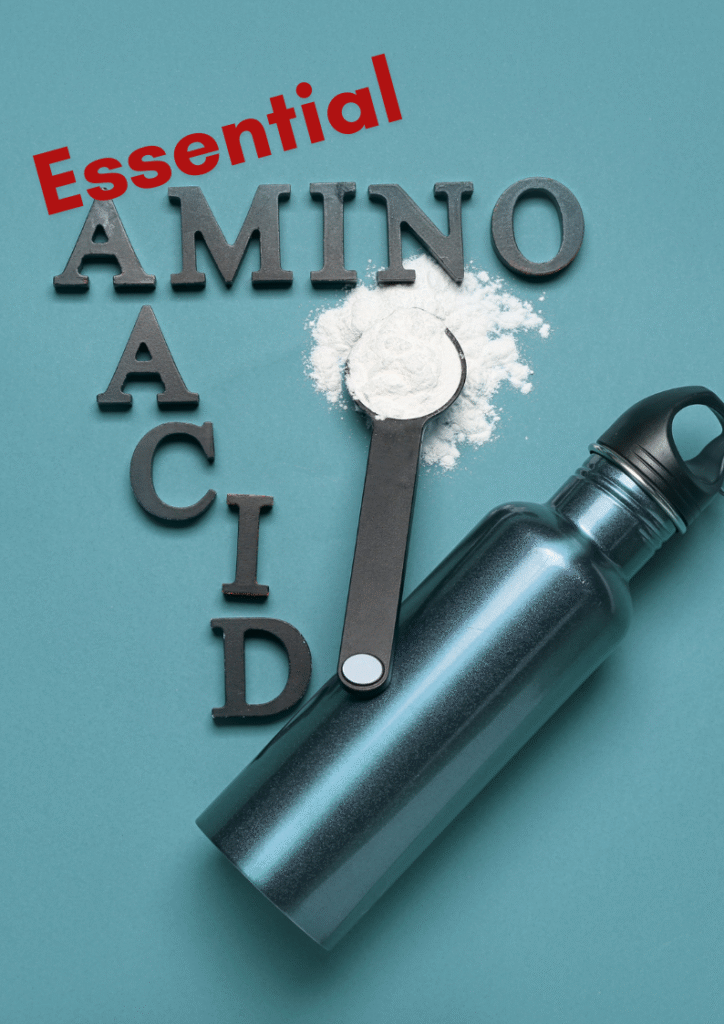
EAAs: The Tiny Nutrients With Big Muscle (and Health) Power

If you’ve ever heard someone throw around the term EAAs in the gym like it’s some exclusive secret code, don’t worry—you’re about to be in the club. And no, it’s not a new boy band. EAAs stand for Essential Amino Acids, and if you care about feeling strong, recovering faster, and making your body run like it came with the premium engine upgrade… these little guys matter. Let’s break it down without the confusing biochem jargon. You deserve clarity, not a migraine. What Exactly Are EAAs? EAAs are nine amino acids your body absolutely needs but cannot make on its own. Since your body can’t DIY these, you must get them from food or supplements. These nine VIPs are: Leucine Isoleucine Valine Lysine Methionine Threonine Phenylalanine Tryptophan Histidine Think of them as the foundational building blocks for nearly everything your body does—especially anything related to muscle, energy, and recovery. Why EAAs Matter (According to Actual Science, Not Bro Science) 1. They Trigger Muscle Protein Synthesis (MPS) This is the process your body uses to repair and build muscle.Research shows that EAAs, especially leucine directly stimulate MPS.Translation: EAAs flip the muscle-building switch. Without them, the switch stays off… even if you worked out like a beast. 2. They Improve Recovery After Training Studies show EAA supplementation can reduce muscle soreness and improve recovery by supporting faster tissue repair. Your muscles basically go, “Thanks… I needed that.” 3. EAAs Help Preserve Lean Muscle When Calories Are Low Cutting? Dieting? Living off iced coffee and vibes?EAAs help prevent muscle breakdown during calorie deficits by providing the amino acids your body would otherwise steal from your muscle tissue. Science calls it “anti-catabolic.” You can call it “saving your progress.” 4. They Support Exercise Performance Research has shown EAAs can: Reduce perceived fatigue Improve endurance Enhance workout output.                                                                                                                                                                 That means the “I’m dying”-Feeling gets pushed back a bit further. 5. EAAs Support Immune, Hormonal & Metabolic Health Your immune system uses amino acids like tools in a toolbox.Your neurotransmitters? Built from amino acids.Your metabolism? Also supported by amino acids. This is why low protein diets often come with fatigue, mood dips, and constant hunger. EAAs help keep the whole system running smoothly. EAAs vs BCAAs: The Battle of the Acronyms BCAAs get a lot of hype, but here’s the science-backed truth: they’re only part of the picture. BCAAs—leucine, isoleucine, and valine—are three of the nine essential amino acids and do play a role in muscle protein synthesis, especially leucine, which acts as the “on” switch. However, research shows that BCAAs alone cannot fully stimulate or sustain muscle protein synthesis because your body still needs the other six essential amino acids to actually build and repair muscle tissue. It’s like turning on the oven without having all the ingredients to bake the cake. EAAs, on the other hand, provide the full lineup your body requires for complete muscle repair, recovery, and growth. Bottom line: BCAAs can help, but EAAs do the whole job—and if your goal is real results, the full team always beats the highlight reel. Where to Get EAAs (No Supplements Required—Unless You Want Them) Good news: if you’re eating enough high-quality protein, you’re already getting your EAAs—no fancy powder required. Complete protein sources naturally contain all nine essential amino acids in the amounts your body needs. Think eggs, chicken, turkey, fish, lean beef, Greek yogurt, cottage cheese, whey protein, tofu, tempeh, soy, quinoa, and even beans and rice together (teamwork makes the protein complete). Whole foods don’t just deliver EAAs; they also come with vitamins, minerals, and other nutrients that support overall health and recovery. Supplements can be helpful on busy days, around workouts, or if protein intake is inconsistent—but they’re exactly that: a supplement, not a replacement. Food builds the foundation. Supplements just help fill the cracks when life gets messy. When EAAs Are Actually Helpful Do you need EAA supplements? Not mandatory.But they can be smart in certain situations: Pre- or intra-workout: to improve energy and reduce fatigue Post-workout: to speed up recovery On low-protein days: when you’re barely scraping 50g by dinner During cutting phases: to help protect lean muscle And yes, they’re safe for most people—but anyone with medical conditions should check with their healthcare provider (we love gains, not lawsuits). How Much Do You Need? (What the Science Actually Says) Your body is built to thrive—EAAs are just one of the tools that help it do exactly that. Research consistently shows that the minimum protein intake to prevent deficiency is 0.8 g per kilogram of body weight per day, but let’s be honest—that’s the bare minimum to survive, not to thrive. For active adults, resistance training clients, and anyone looking to build or maintain lean muscle, the evidence strongly supports a higher intake. Multiple studies and position stands (including the International Society of Sports Nutrition) show optimal results for muscle protein synthesis, recovery, and body composition occur in the range of 1.4–2.0 g/kg/day, with some evidence supporting up to 2.2 g/kg/day during fat loss or intense training phases. Hitting this range ensures you’re getting all nine essential amino acids in sufficient amounts, especially leucine, which has been shown to be a key trigger for muscle protein synthesis. Translation: if your protein intake is low, your body doesn’t have enough EAAs to do the job—no matter how hard you train.   Bottom Line EAAs aren’t magic, but they’re absolutely essential (literally).They help you: Build muscle Recover faster Stay energized Support immune and metabolic health Protect your hard-earned progress If your

EAAs: The Tiny Nutrients With Big Muscle (and Health) Power Read More »

Nutrition, Wellness
Close-up of hands gripping an overweight belly, depicting body fat focus.

Inflammation: What It Is, Why It Happens, and How to Calm the Fire With Food

If you’ve ever felt puffy, achy, sluggish, or like your body is “on edge,” there’s a good chance inflammation is involved. But before we drag inflammation like it’s the villain of the year, let’s get one thing straight: inflammation is actually your body trying to help you. The problem?  Sometimes the system doesn’t shut off…and that’s when things get messy. Let’s break it all down in a way that’s science-backed and easy to understand. What Is Inflammation, Really? Inflammation is your immune system’s natural response to stress, injury, or invaders (like bacteria, viruses, or that questionable sushi from last week). Two main types: Acute inflammation Short-term. Helpful. Like when you twist your ankle and it balloons up—your body is sending in a SWAT team to fix the damage. Chronic inflammation Long-term. Not helpful.This is when the immune system stays turned on—low-grade, simmering in the background, day after day. Chronic inflammation has been linked to: Type 2 diabetes Heart disease Arthritis Cognitive decline Autoimmune conditions Obesity Digestive issues Chronic inflammation is often measured by high levels of CRP (C-reactive protein), IL-6, TNF-α, and other inflammatory markers. Elevated levels are consistently associated with higher disease risk. Get the free E-book ! This is the guide your future self will want you to download and your joints, digestion, energy, and mood will thank you for Free E-book How Does Inflammation Start? Inflammation is triggered when the immune system senses a threat. That “threat” can come from: 🔹 1. Poor diet Highly processed foods can activate inflammatory pathways like NF-κB. Common triggers include: Added sugars Trans fats Refined carbs Excess alcohol Industrial seed oils (corn, soybean, cottonseed) 🔹 2. Chronic stress Your stress hormone (cortisol) is meant to protect you, but when it stays elevated, it disrupts immune function and increases inflammation. 🔹 3. Lack of sleep Even one bad night increases inflammatory protein IL-6. Long-term sleep deprivation? Major inflammation party. 🔹 4. Sedentary lifestyle Studies show inactivity raises CRP, while movement quickly lowers inflammatory markers. 🔹 5. Environmental toxins Pollution, smoke, mold, and chemicals can activate immune cells and trigger inflammation. 🔹 6. Excess body fat Especially visceral fat—the kind around the organs. This fat isn’t just storage, it’s metabolically active and releases inflammatory cytokines. What to Avoid If You Want to Reduce Inflammation You don’t need to be perfect—just make small adjustments that stack up. Foods that fuel inflammation: Processed meats (bacon, sausage, deli meats) Refined carbohydrates (white bread, pastries, sugary cereals) Sugary drinks (sodas, energy drinks, sweetened coffees) Fried foods Excessive alcohol Added sugars Trans fats (often listed as “partially hydrogenated oils”) Industrial seed oils (corn, soybean, safflower, cottonseed—high in omega-6) Diets high in omega-6 and low in omega-3 fatty acids can create an imbalance that increases inflammation. While omega-6 isn’t “bad,” too much of it without omega-3 causes issues. What to Eat to Calm Inflammation These foods help lower inflammatory markers and support healing. You don’t have to overhaul everything at once just add more of these daily  Anti-Inflammatory All-Stars 🫐 1. Berries Rich in anthocyanins—compounds shown to reduce oxidative stress and inflammation. 🥬 2. Leafy greens Spinach, kale, arugula—they’re full of antioxidants, magnesium, and polyphenols. 🐟 3. Fatty fish Wild salmon, sardines, mackerel, trout. Omega-3s (EPA & DHA) actively decrease inflammatory signaling. 🫒 4. Extra-virgin olive oil Loaded with oleocanthal, which works similarly to ibuprofen in its anti-inflammatory effect. 🥑 5. Avocados Contain monounsaturated fats, fiber, and antioxidants. 🍵 6. Green tea EGCG is a powerful anti-inflammatory polyphenol. 🍊 7. Citrus fruits Vitamin C helps regulate immune function and control inflammation. 🧄 8. Garlic & ginger These two are basically the Beyoncé and Rihanna of anti-inflammatory spices—powerful and always on the charts. 🫘 9. Beans & legumes Fiber reduces inflammation by improving gut health—70% of your immune system lives in your gut! 🍫 10. Dark chocolate (70%+) Yes—your permission slip. Polyphenols help lower CRP. Fun Fact: Your Gut Controls Your Inflammation ! A healthy gut microbiome helps regulate the immune system. A damaged one increases inflammation.   Foods that support a healthy gut: Fermented foods (kimchi, sauerkraut, kefir) High-fiber foods Prebiotic foods (onions, garlic, bananas, asparagus) Final Thoughts: You Can Turn Down the Heat! Inflammation doesn’t have to run your life. Small, consistent habits—movement, sleep, stress reduction, and an anti-inflammatory diet—can dramatically change how you feel. Think of it as giving your body the support it’s been begging for. And remember: Health isn’t just the absence of disease; it’s the presence of vitality.  If you want help building a lifestyle and nutrition plan that reduces inflammation, boosts energy, and fits into your real life, reach out and I’ll guide you step-by-step. Get in Touch All Posts Exercise Nutrition Wellness   Back Other Know Your Gym Tools: The Barbell July 29, 2026/No Comments There’s something about the barbell area of the gym that can feel intimidating. Maybe it’s the clanging plates, the squat… Read More Train like an Athlete, not a Bodybuilder: A smarter way to lose weight June 16, 2026/2 Comments The other day I was scrolling through fitness content when I came across a phrase that immediately caught my attention:… Read More Know Your Gym Tools: The Kettlebell March 10, 2026/No Comments (Beginner’s Guide to Strength, Confidence, and Results) Walk into any gym, and you’ll probably see them sitting in a corner,… Read More Jump Training: What is it and why you should do it (especially if you’re a woman in menopause)? January 23, 2026/No Comments What happens to our bones as we age ? As we age, our bones slowly begin to lose density because… Read More EAAs: The Tiny Nutrients With Big Muscle (and Health) Power January 3, 2026/No Comments If you’ve ever heard someone throw around the term EAAs in the gym like it’s some exclusive secret code, don’t… Read More Inflammation: What It Is, Why It Happens, and How to Calm the Fire With Food November 21, 2025/No Comments If you’ve ever felt puffy, achy, sluggish, or like your body is “on edge,” there’s a good chance inflammation

Inflammation: What It Is, Why It Happens, and How to Calm the Fire With Food Read More »

Nutrition, Wellness
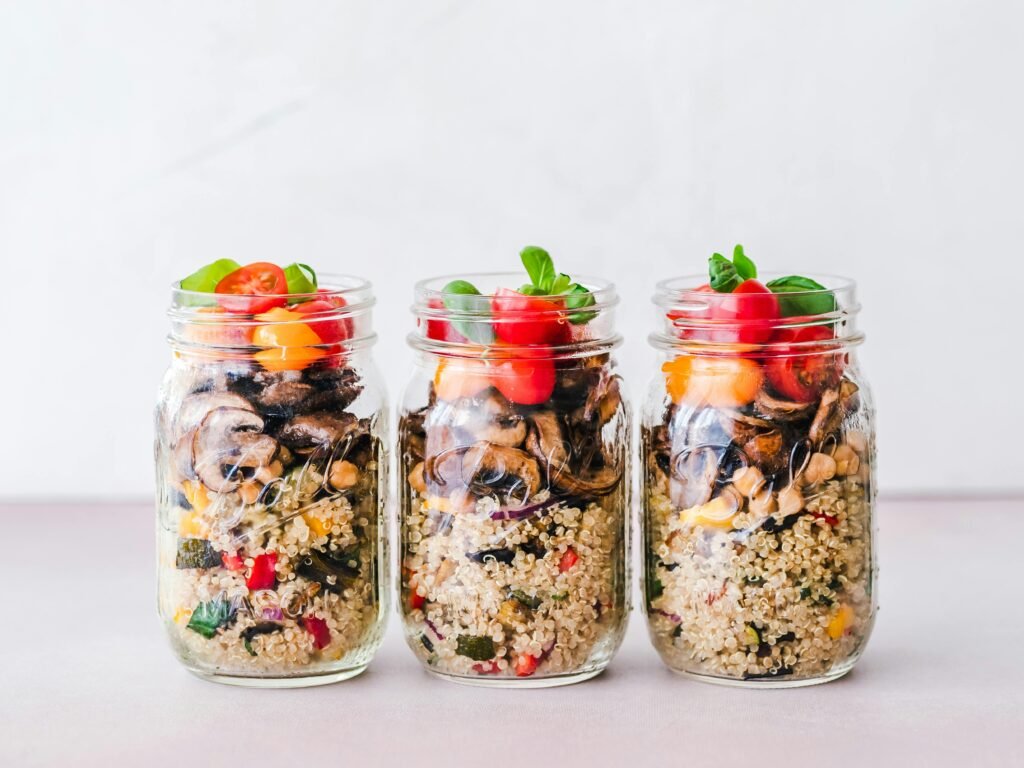
Three jars of colorful quinoa salad with mushrooms and tomatoes, perfect for a healthy meal.

Fiber: The Unsung Hero of Your Gut (and Your Gains)

When we talk about nutrition, protein and carbs often steal the spotlight, but there’s another nutrient quietly doing superhero work behind the scenes: fiber. It keeps your gut happy, your energy steady, and even your mood in check. Let’s break down why fiber deserves more love in your diet and how to actually get enough of it every day. What Exactly Is Fiber? Fiber is a type of carbohydrate that your body can’t digest. Instead of being broken down into sugar like other carbs, fiber passes through your digestive system mostly intact — and that’s a good thing. It feeds your gut bacteria, helps regulate digestion, balances blood sugar, and even supports heart health. There are two main types of dietary fiber? Soluble fiber is a type of dietary fiber that dissolves in water to form a gel-like substance in the digestive tract. It helps lower cholesterol, control blood sugar levels, and support healthy digestion. Here are some examples and sources of soluble fiber: Examples of Soluble Fiber Pectin – found in fruits like apples, citrus fruits, and berries Beta-glucan – found in oats and barley Psyllium – found in the husks of Plantago ovata seeds (often used in fiber supplements) Inulin – found in chicory root, garlic, onions, and asparagus Gums and mucilages—found in legumes and some seeds Food Sources Rich in Soluble Fiber Oats and oatmeal—great for breakfast or baking Barley—can be used in soups, stews, or salads Apples and citrus fruits—easy snacks with natural sweetness Legumes (beans, lentils, peas)—excellent for soups, curries, and salads Flaxseeds and chia seeds can be added to smoothies, yogurt, or cereal Carrots, sweet potatoes, and broccoli—fiber-rich vegetables with added nutrients Psyllium husk—can be mixed into water or added to recipes for an extra fiber boost Insoluble fiber is the type of dietary fiber that does not dissolve in water. It adds bulk to the stool and helps food pass more quickly through the stomach and intestines, promoting healthy digestion and preventing constipation. It’s the “broom” that sweeps waste through your digestive tract. Here are some examples of insoluble fiber and how you can get it: Grains and Cereals Whole wheat flour – found in whole-grain bread, pasta, and baked goods. Brown rice – a great alternative to white rice with higher fiber content. Barley and bulgur—both contain a mix of soluble and insoluble fiber. Vegetables Broccoli—a rich source of insoluble fiber and antioxidants. Cauliflower—high in fiber and adds bulk to your diet. Green beans contain a good amount of insoluble fiber. Carrots—raw or cooked, they’re an easy way to add fiber to meals.  Fruits (with skin) Apples and pears (with the skin)—most of the insoluble fiber is in the peel. Grapes and berries (with skins) offer fiber and polyphenols for gut health.  Nuts and Seeds Almonds, walnuts, and sunflower seeds provide both insoluble fiber and healthy fats. Flaxseeds (whole)—though ground flaxseeds have more soluble fiber, the whole ones provide insoluble fiber too. Legumes Lentils and kidney beans – contain both soluble and insoluble fiber for balanced digestion. Both are essential and most people need more of both. Start slow. If you’re adding more fiber, increase your intake gradually and drink plenty of water. Your gut needs a little time to adjust! Why We Need Fiber (The Benefits) Supports Gut Health: Fiber is your gut microbiome’s favorite food. When your gut bacteria ferment certain types of fiber (especially prebiotic fiber), they produce short-chain fatty acids (SCFAs) like butyrate, which nourish your colon cells and reduce inflammation. Studies show that higher SCFA levels are linked to better immune function and even improved mental health. (Source: Nature Reviews Gastroenterology & Hepatology, 2020) Keeps You Regular: Insoluble fiber adds bulk to stool and helps food move efficiently through your digestive system — no more “digestive drama.” Balances Blood Sugar: Soluble fiber slows down how fast sugar enters your bloodstream, keeping your energy stable and preventing those “crash-and-crave” moments.   A meta-analysis in The American Journal of Clinical Nutrition (2019) found that people who eat more fiber have a lower risk of developing type 2 diabetes. Lowers Cholesterol: Soluble fiber (found in oats, apples, beans) helps lower LDL (“bad”) cholesterol by binding to it in your gut and removing it through waste. Supports Weight Management: Fiber-rich foods keep you full longer, which helps control appetite naturally — no calorie-counting needed. How Much Fiber Do You Need? The Dietary Guidelines for Americans (2020–2025) recommend: Women: 22–28 grams per day Men: ~38 grams per day Most adults only get about half of that. A simple goal: aim for 14 grams of fiber per 1,000 calories you eat a day. Alahmari, L. A. (2024). Dietary fiber influence on overall health, with an emphasis on CVD, diabetes, obesity, colon cancer, and inflammation. Frontiers in Nutrition, 11, 1510564. https://doi.org/10.3389/fnut.2024.1510564 Soluble vs. Prebiotic Fiber—What’s the Difference? Here’s where it gets fun (and a little nerdy): Soluble fiber and prebiotic fiber are often mentioned together, but they play slightly different roles in digestive health.  Soluble fiber dissolves in water to form a gel-like substance in the gut, helping to slow digestion, control blood sugar, and lower cholesterol. You can find it in foods like oats, apples, beans, and flaxseeds.  Prebiotic fiber, on the other hand, specifically feeds the beneficial bacteria in your gut, supporting a balanced microbiome and promoting overall digestive wellness. While all prebiotic fibers are a type of soluble fiber, not all soluble fibers have prebiotic effects—making prebiotics a unique subset with extra gut-nourishing benefits. Think of prebiotic fiber as the VIP section of the fiber club—they keep your microbiome strong, diverse, and happy. Final Thoughts: Fiber isn’t just about digestion—it’s about longevity, energy, and balance. When your gut thrives, you thrive. So next time you plan your meals, ask yourself, “Where’s my fiber coming from?” Your gut (and your future self) will thank you. If you’ve finished reading this article and feel curious, inspired, or even a little confused about where to start with your nutrition goals, don’t wait—reach out today and let’s work together

Fiber: The Unsung Hero of Your Gut (and Your Gains) Read More »

Nutrition
Group of cheerful young multiracial ladies laughing and dancing with beer bottles in hands during summer party on rooftop on sunny day

The Joyful Science of Dance: How Moving to the Beat Heals Your Body and Mind

Ever notice how you feel lighter, happier, and somehow alive after dancing, even if you’re just grooving in your kitchen to your favorite song? That’s not just in your head (well, it is, but in a good way!). Science shows that dancing is one of the most powerful, all-in-one activities for both physical and mental well-being. It’s cardio, coordination, and therapy all rolled into one joyful package. Why Moving to the Beat Is Medicine for the Body and Mind When you dance, you’re engaging nearly every muscle group: legs, core, arms, glutes, and even your facial muscles (smiling counts!).  Depending on the style, dancing can burn anywhere from 200 to 600 calories per hour. A 2018 systematic review in the Journal of Physical Activity and Health and other relevant publications confirms dance training’s positive effects on fitness and balance. Not only does it improve aerobic fitness, but it also enhances muscular endurance and flexibility, especially in adults who aren’t fans of traditional gym workouts. And the best part? Because it’s fun, you’re more likely to stick with it. Consistency beats intensity every time when it comes to fitness results. . It Improves Brain Function and Memory Yes, dancing literally makes you smarter! Research from the New England Journal of Medicine (2003) found that dancing regularly can reduce the risk of dementia by up to 76%, more than any other physical activity studied. That’s because dancing combines movement, rhythm, coordination, and memory—forcing your brain to constantly form new neural connections. Learning choreography challenges your brain the same way puzzles or language learning do, strengthening memory and mental flexibility. Plus, when you dance, your brain releases dopamine and serotonin, the feel-good chemicals that improve mood and focus. It’s a Natural Stress Buster and Mood Booster Ever dance it out after a long, stressful day? There’s science behind that magic. Dancing reduces levels of the stress hormone cortisol while increasing endorphins, the body’s natural painkillers and happiness boosters. A 2015 study in Frontiers in Psychology found that dancing, especially in social or group settings, enhances feelings of connection and emotional release — sometimes even more effectively than traditional exercise. Whether you’re twirling solo or following choreography in a class, that rhythmic movement helps your body process emotions and tension in a healthy way. It Strengthens Social Bonds (and Self-Confidence) Dancing is universal. It transcends language and culture. Humans have been dancing for over 9,000 years, often to celebrate, grieve, connect, or express joy. Modern research confirms that dancing together builds empathy and trust. Group dance or partner styles like salsa and swing promote oxytocin release, known as the “bonding hormone.” That’s why people who dance socially often report higher levels of happiness and lower levels of loneliness. Even if you’re dancing solo, moving with the music can boost body image and self-esteem. You start focusing less on how your body looks and more on what it can do, and that’s a mindset shift worth celebrating. It Supports Heart Health, Balance, and Longevity Dancing is a fantastic cardiovascular exercise. A 2016 study in the American Journal of Preventive Medicine found that regular dancers had a 46% lower risk of dying from heart disease compared to non-dancers. The combination of dynamic movements and rhythm helps regulate blood pressure, improve circulation, and enhance balance — all key factors for longevity. Dance styles like ballroom, Zumba, and even hip-hop require coordination that engages both hemispheres of the brain and activates stabilizing muscles often overlooked in typical workouts. You Don’t Need to Be a Pro to Reap the Benefits Here’s the best news: you don’t have to know what you’re doing to benefit. Whether it’s salsa, ballet, line dancing, or a TikTok routine, the point is movement to music. Put on your favorite playlist and dance like nobody’s watching (because they probably aren’t, and even if they are, you’re inspiring them). The goal isn’t perfection; it’s expression, joy, and connection. Final Thoughts: Move with Joy, Not Just for Results I always tell my clients — fitness isn’t punishment for what you ate, it’s a celebration of what your body can do. Dancing reminds us of that truth every time we move to the music. So next time you’re looking for a way to move your body, skip the treadmill, turn up your favorite song, and dance like nobody’s watching. Your mind, body, and heart will thank you. Ready to bring more fun and movement into your fitness routine? I help clients build stronger, healthier bodies through personalized training and wellness coaching, and yes, we make it enjoyable. Let’s work together to find the kind of movement that makes you want to move.👉 Contact me here to get started!

The Joyful Science of Dance: How Moving to the Beat Heals Your Body and Mind Read More »

Wellness

The Romanian Deadlift

The Glorious, Slightly Theatrical History of the Romanian Deadlift. Once upon a gym in a time before Instagram clips of people pretending to “hip hinge,” a modest, efficient lift slithered out of Olympic weightlifting warm-ups and quietly changed the way humans moved heavy things. That lift is the Romanian deadlift, the RDL (my favorite of lifts): the hip hinge’s classy cousin who wears a tailored singlet and actually knows how to use its hamstrings. How it started (and why it’s named after Romania) The Romanian deadlift didn’t arrive with fanfare, neon lights, or a motivational playlist. It arrived with Nicu Vlad, an Olympic-weightlifting wizard from Romania, and his coach, Dragomir Cioroslan. In 1990, Nicu Vlad was training in the United States, either at the Olympic Training Center or at San Francisco’s famed Sports Palace gym (accounts vary). While preparing for the clean and jerk, he introduced a variation of the deadlift. Unlike the traditional version, which begins with the bar on the floor, Vlad started from a standing position and emphasized the eccentric, or lowering, phase of the lift. Vlad used a flat-backed, semi-stiff-legged pulling pattern as an accessory to make his clean stronger and his back resilient.  This technique kept a slight bend in the knees, a rigid, flat back, and a deep hip hinge. He lowered the bar to around mid-shin before driving back up to the start, maintaining constant muscle tension throughout. The purpose was clear: to build strength in the hamstrings and the entire posterior chain, key players in generating the explosive pulling power essential to Olympic lifting. Vlad Nicu During this coaching clinic, as the lift was demonstrated, folks took notes, Jim Schmitz (an American coach at the clinic) apparently asked what to call it, and someone said “Romanian deadlift.” The name stuck not because it’s mysterious or regal, but because it was practical and very, very effective. What the Romanian deadlift actually is (so you can stop pretending) https://www.youtube.com/watch?v=2bmuYtv4HbQ You do not “bend over and yank.” You hinge: push the hips back, keep the spine long, let the hamstrings whisper sweet tension into your legs, then stand tall by squeezing the glutes and locking the hips.  Compared to a conventional deadlift, the RDL usually starts at the top (you lower the bar from the rack or after a light descent) and emphasizes eccentric control and hamstring length under load.  It’s an accessory that builds the posterior chain like a small, benevolent machine that hands out single-serving packets of athleticism. Evolution and varieties — the deadlift family tree The deadlift universe is vast and dramatic. The Romanian deadlift sits on a plush but practical branch. Here’s the family reunion: Romanian Deadlift (RDL): Hip hinge, modest knee bend, big hamstrings, and back control. Great for posture, posterior-chain hypertrophy, and training the hinge without grinding out max pulls. Stiff-Legged Deadlift: Similar to the RDL but with less knee bend and more lumbar stretch. Dangerous if you treat it like a flexibility contest. Conventional Deadlift: Floor start, more knee bend, big quad-and-glute contribution. The classic heavy-lift test. Sumo Deadlift: Wider stance, more upright torso, shorter pull. Loved by lifters who enjoy tactical foot placement. Trap-Bar Deadlift: Pull from inside a hex bar — easier on the back, hip-dominant without as much lower-back torque. Snatch-Grip / Deficit / Rack Pulls: Variations that change range of motion, leverage, and weak points. All exist to make you better at some part of the lift (or to make your ego take a walk). Over the years, coaches borrowed cues from Olympic lifting, powerlifting, strongman, and even yoga. The RDL was quietly adopted by bodybuilders for hamstrings, by powerlifters for lockout strength, by athletes for hinge mechanics, and by Sunday lifters who wanted to show that they had a “posterior chain.” Progression has been practical: lighter, controlled reps for hypertrophy; heavier, tighter sets for strength and carryover to big pulls. Trapbar Deadlift World records? Yes. And they’re a spectacle. If you’re asking “who has lifted the heaviest deadlifts ever?” strap in — these are feats of human showmanship, science, and stubborn fascination with the question “what if we put everything on the bar?” The modern all-time men’s deadlift world record has been pushed into the half-ton club and beyond by strongmen who pull in suits, straps, on different bars (elephant bar, thick handles), and in both sanctioned competitions and exhibition attempts. Recently, Hafþór Júlíus Björnsson — yes, the Icelandic giant sometimes known as “The Mountain” — has been rewriting the record books with staggering pulls, including official competition lifts in the 500+ kg range. (There’s history here: previous milestones included Eddie Hall’s 500 kg, Andy Bolton’s equipped records, and more.) These lifts are part raw strength, part event setup, and part a very public negotiation with gravity. “The Mountain” Hafþór Júlíus Björnsson Lucy Underdown Women are absolutely deadlifters — make no mistake. The women’s deadlift has exploded in recent years as strongwomen and powerlifters push boundaries. Lucy Underdown (a standout in strongwoman circles) has repeatedly raised the bar for women’s deadlifting with world-record pulls in the 300+ kg range in strongwoman events (elephant bar and conventional arenas), while historic powerlifting names like Becca Swanson set massive equipped deadlifts years ago that still inspire debate and admiration. The point is: women lift heavy, break records, and make the rest of us reconsider our life choices mid-workout. Why you should care (benefits that aren’t just for flexing) The RDL and deadlifts in general are more than Instagram moments — they are movement patterns with huge carryover: Strength and hypertrophy: RDLs load the hamstrings, glutes, and spinal erectors in a way squats don’t, improving posterior-chain mass and strength.  Injury prevention: A well-trained hinge reduces lower-back injuries by teaching the hamstrings and glutes to do the work instead of the lumbar spine. Improved athleticism: Sprinting, jumping, and changing direction all require a powerful hip hinge. RDLs build the spring. Better posture and lumbar control: Eccentric control in the RDL strengthens the back through the range you need to resist

The Romanian Deadlift Read More »

Exercise
Scroll to Top