My Daughter Was Just Diagnosed With Mild Scoliosis: What I’m Learning as a Mom and Personal Trainer
The diagnosis caught me off guard.
As a personal trainer, I spend a lot of time talking about posture, movement, core strength, mobility, and taking care of your body. I work with people of all ages and have seen firsthand how much the body can adapt when we give it the right tools.
So when my daughter was diagnosed with mild scoliosis, my first reaction was not as a trainer.
It was as a mom. I worried.
What caused it? Will it get worse? Will she have back pain? Will this affect her as an adult? Does she need to stop doing certain exercises? Could I have noticed it sooner?
And then I did what I always tell my clients to do when something changes with their health:
Get the facts before you panic.
So, What Exactly Is Scoliosis?
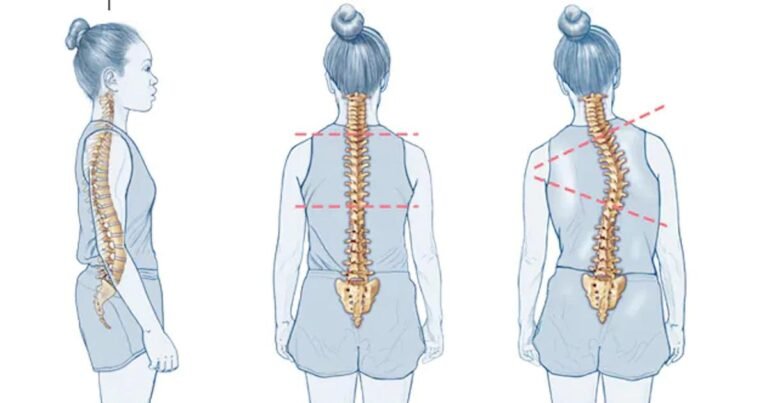
Scoliosis is a three-dimensional spinal condition in which the spine develops an abnormal sideways curvature, often creating a curve that looks somewhat like a “C” or “S.”
A diagnosis of scoliosis generally means the spinal curve measures at least 10 degrees using the Cobb angle on an X-ray.
When scoliosis develops during adolescence without another identifiable underlying cause, it is commonly called adolescent idiopathic scoliosis (AIS).
And that word idiopathic is important.
It basically means:
We don’t know exactly why it happened.
AIS is the most common form of scoliosis and typically occurs between the ages of 10 and 18. It can affect children who appear completely healthy and active, and many parents don’t discover it until adolescence.
It is not necessarily something you caused.
This is one of the first things I had to remind myself.
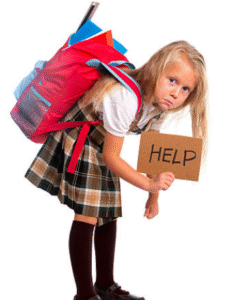
Scoliosis is not simply the result of bad posture, carrying a heavy backpack, sitting too much, or not exercising enough. A heavy backpack isn’t considered a cause of scoliosis or something that makes the curvature worse.
Researchers believe genetics and several biological factors may play a role, but there isn’t one simple explanation for why one teenager develops scoliosis while another doesn’t.
That uncertainty can be frustrating for parents.
But it also means we shouldn’t blame ourselves.
Why Adolescence Matters So Much.
One of the biggest reasons scoliosis is monitored carefully during adolescence is growth.
The teenage years can bring incredibly rapid changes to the skeleton. During periods of rapid growth, an existing spinal curve can progress.
Once a child reaches skeletal maturity, the risk of significant progression generally decreases substantially. However, larger curves—particularly curves over about 60 degrees—can continue to progress during adulthood.
That’s why the number on the X-ray isn’t the only thing doctors consider.
They also look at things such as:
- How large the curve is
- Where the curve is located
- Whether there are one or multiple curves
- How much skeletal growth remains
- How quickly the curve is changing
- The child’s overall development
In other words, a mild curve in a teenager isn’t automatically a lifelong problem.
But it does deserve attention.
What Happens If Mild Scoliosis Is Found?
This is where I think parents can easily become frightened unnecessarily.
Hearing the word scoliosis can make you immediately think:
Brace. Surgery. Spinal fusion.
But that’s not the reality for every child.
For smaller curves, doctors may simply recommend observation and periodic X-rays to determine whether the curve is changing as the child grows. The Scoliosis Research Society generally describes observation as appropriate for curves below approximately 25–30 degrees, depending on the individual situation.
For some adolescents who are still growing and have larger curves, bracing may be recommended to reduce the risk of progression.
Surgery is generally reserved for substantially larger curves or situations where there is a high risk of continued progression.
So a diagnosis does not automatically mean that a teenager is headed for surgery.
That distinction matters.
Can Exercise Fix Scoliosis?
Here’s where I want to be especially careful as a personal trainer.
Exercise is valuable. But exercise should not be marketed as a magic cure for scoliosis.
There is a difference between:
Managing and supporting the body
and
structurally correcting the spinal curve.
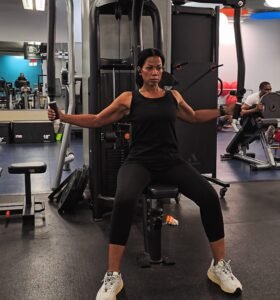
Exercise can help an adolescent develop strength, coordination, balance, mobility, body awareness, and confidence. Physical activity is generally encouraged for children with scoliosis unless they have pain or their medical team has given them specific restrictions. The Scoliosis Research Society specifically notes that keeping the trunk strong is beneficial.
But I am not going to tell my daughter that a few exercises will magically straighten her spine.
That would be irresponsible.
Instead, my goal is to help her build a strong, capable body around the spine she has.
What I Plan to Do as Her Mom and Personal Trainer
This is where my professional experience becomes useful—but also where I have to know my limits.
I am her mom first. I’m not her scoliosis specialist.
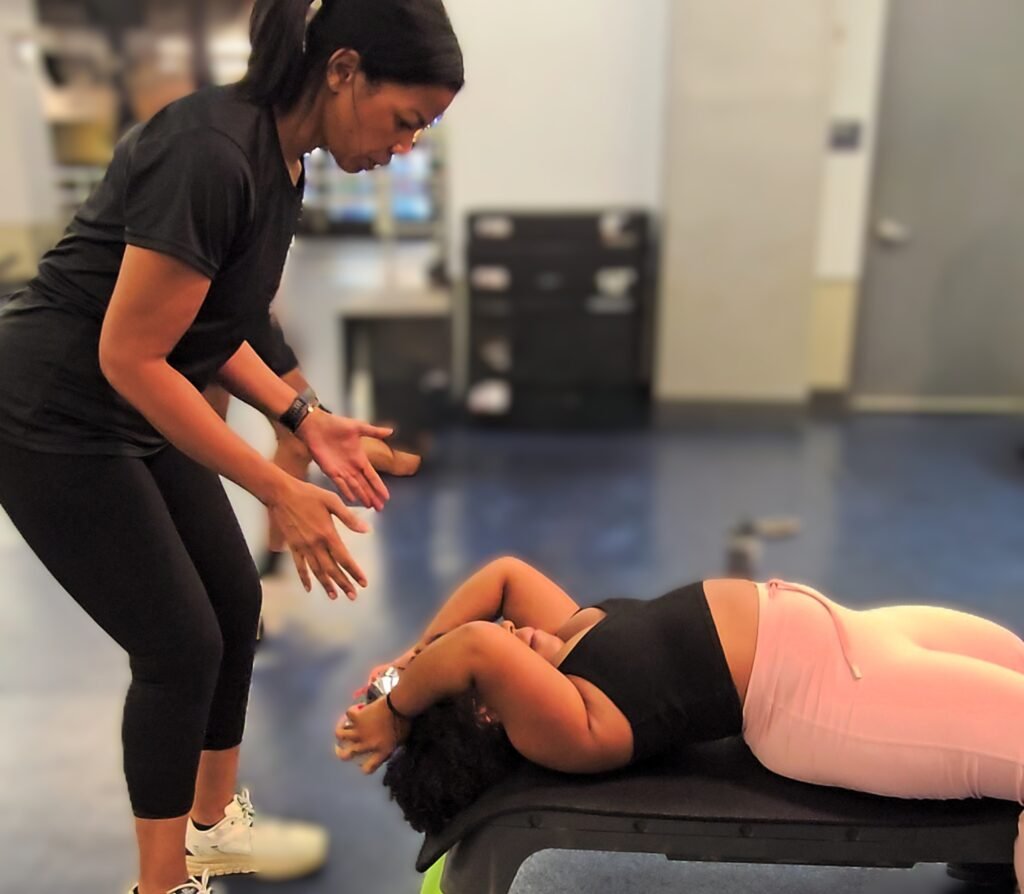
I want her care to be guided by her physician and, if recommended, a physical therapist who understands adolescent scoliosis.
My role is to support that plan.
1. Build overall strength
Strength training isn’t something I want her to fear because she has scoliosis.
Quite the opposite.
I want her to learn how to safely become strong.
That may include appropriately selected movements involving:
- Squats and squat variations
- Hip-dominant movements
- Glute strengthening
- Core stabilization
- Upper-body pulling and pushing
- Carrying exercises when appropriate
- Balance and coordination
- General functional movement
The exact exercises will depend on her individual curve, symptoms, movement patterns, medical recommendations, and physical maturity.
There is no universal “scoliosis workout.”
And anyone selling one probably needs to put the megaphone down.
2. Focus on core control—not endless crunches

When I say “core,” I don’t mean doing 100 sit-ups.
The core is much more than the abdominal muscles.
I want to help her develop the ability to control her trunk while she moves her arms and legs.
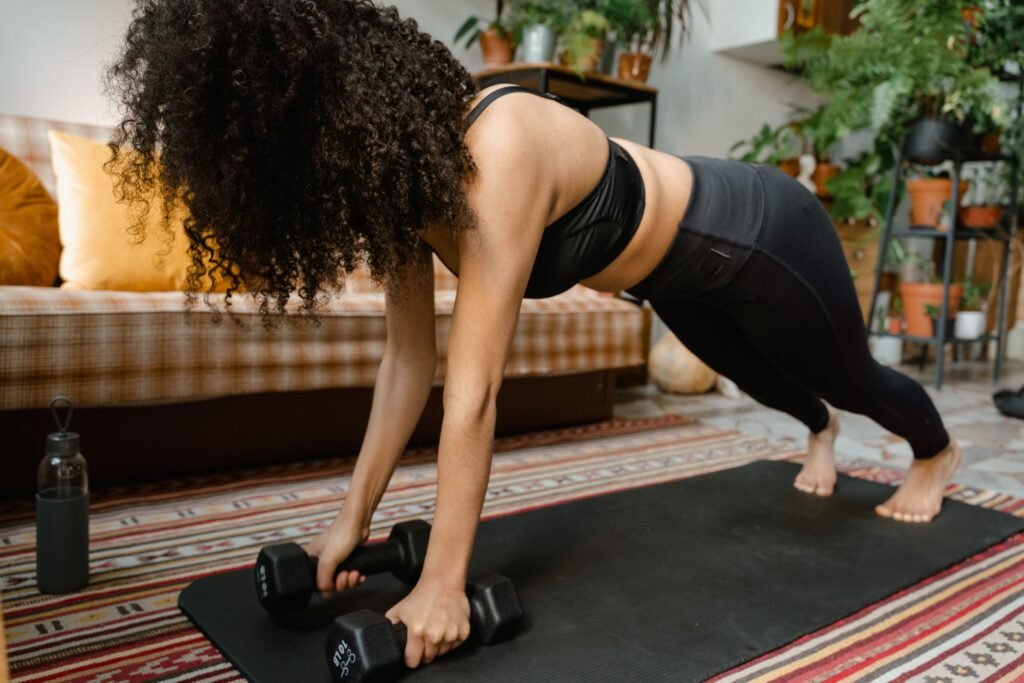
That can include exercises such as appropriately modified:
- Dead bugs
- Bird dogs
- Planks
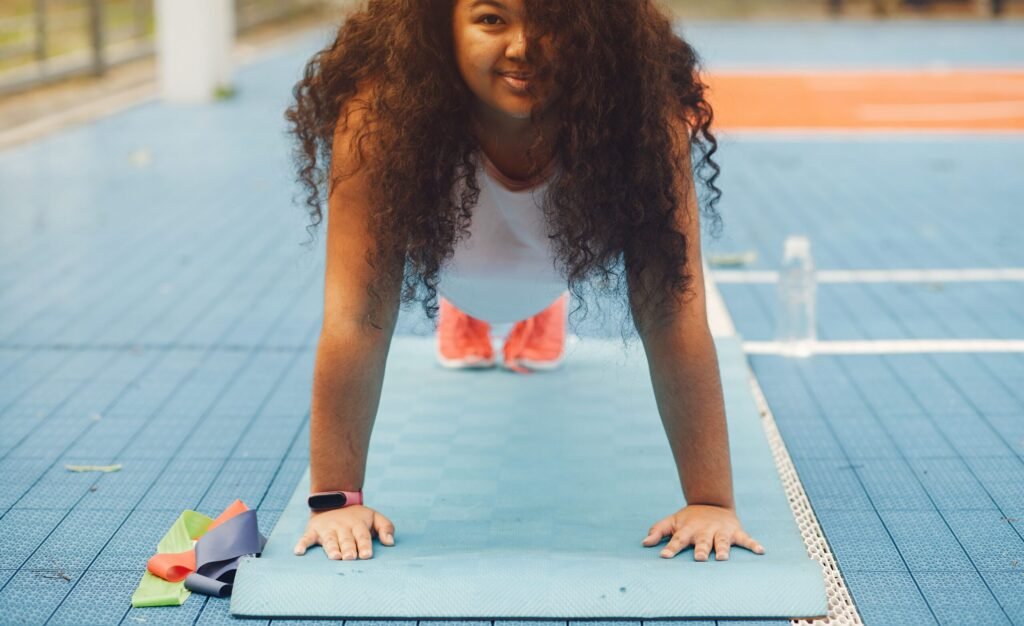
- Side planks
- Anti-rotation exercises
- Controlled carries
- Breathing and trunk-control exercises
The goal is control and stability, not punishment.
3. Work on body awareness
Teenagers are still learning how their bodies move.
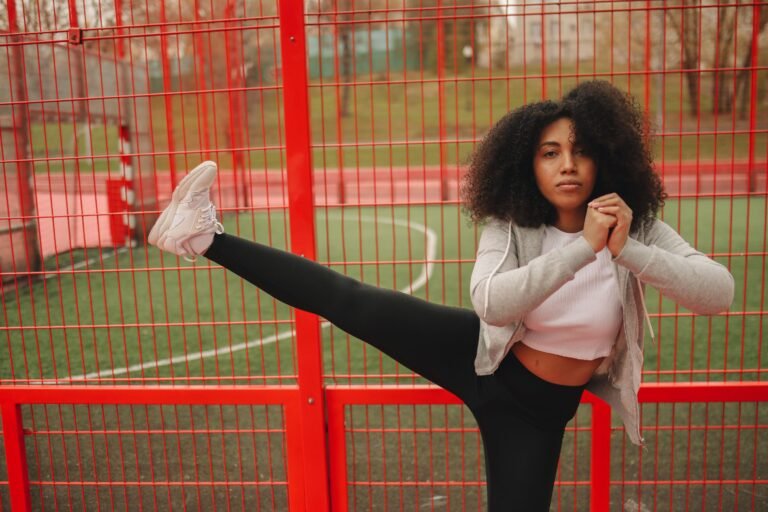
Scoliosis can create asymmetries that may be subtle and difficult for a young person to recognize.
So I want her to become comfortable noticing:
How do I stand?
How do I breathe?
How do I balance?
How do I move?
Where do I feel tension?
Can I control my body through different positions?
That awareness can be incredibly valuable.
4. Keep her active
I don’t want scoliosis to become an identity.
She’s not “the girl with scoliosis.”
She’s my daughter who happens to have scoliosis.
And she should still be able to enjoy movement, sports, walking, dancing, playing, lifting, and being a teenager—within whatever guidelines her medical team provides.
Physical activity is generally beneficial for adolescents with scoliosis.
The goal isn’t to make her afraid of movement.
It’s to teach her how to move well.
What About Progression Into Adulthood?
This was probably one of my biggest concerns.
What happens when she is 25?
Or 40?
Or 60?
The answer depends heavily on the size and behavior of the curve.
Many smaller curves do not continue progressing significantly after skeletal maturity. However, larger curves have a greater risk of continuing to progress during adulthood.
That is why monitoring during the growing years matters.
We’re not trying to predict her entire future from one X-ray.
We’re watching the trend.
Is the curve stable?
Is it changing?
How much growing does she have left?
What does her medical team recommend?
Those questions are far more useful than Googling horror stories at 2 a.m.
And yes, I say that as someone who absolutely understands the temptation.
The Part I'm Most Concerned About Isn't the X-Ray
It’s how she feels about herself.
Teenagers already have enough pressure to look a certain way.
A diagnosis involving the spine can make a young person suddenly become hyperaware of their body.
I don’t want her obsessing over whether one shoulder looks higher than the other.
I don’t want her afraid to wear certain clothes.
I don’t want her thinking she’s fragile.
And I definitely don’t want her believing that her diagnosis defines her.
Her spine has a curve. Her life does not have to.

What I'm Learning Through This
Being a personal trainer doesn’t make me immune to worrying about my own family.
If anything, knowing a lot about the body sometimes gives you more things to worry about because you know all the possibilities.
But I’m learning to separate possibility from probability.
A diagnosis of mild scoliosis does not tell me that my daughter will eventually have severe scoliosis.
It tells me that she has a spinal curvature that needs to be properly assessed and monitored while she grows.
That’s it.
So my plan isn’t to panic.
It’s to monitor, strengthen, educate, and support.
I’ll follow the medical recommendations.
I’ll work alongside qualified healthcare professionals when appropriate.
I’ll help her develop strength and movement skills.
I’ll encourage her to stay active.
And most importantly, I’ll make sure she knows that having scoliosis doesn’t make her broken.
It simply means we’re going to pay a little more attention to how her body grows and moves.
And honestly?
That’s something every one of us could probably benefit from.
Strong doesn’t mean perfectly symmetrical.
Healthy doesn’t mean perfectly straight.
And your body doesn’t have to be perfect for you to make it powerful.

As a personal trainer, I can confidently say I have a plan.
I know the exercises I want her to do, I know why they can be beneficial, and I know how I would structure her training.
But then there’s one tiny complication: she’s a teenager.
And having a personal trainer for a mom does not automatically mean you have any interest whatsoever in taking her advice. In fact, I’m pretty sure my professional credentials become completely invisible the moment I say, “I have an exercise I want you to try.” 😂
So yes, I have a plan.
Getting her to actually do the plan? That’s the real training challenge.
Apparently, I may need to work on my coaching skills at home.
This article reflects my experience as a parent and personal trainer and is intended for education, not individual medical advice. Adolescents diagnosed with scoliosis should be evaluated and monitored by an appropriate healthcare professional. Exercise selection should be individualized, particularly during periods of rapid growth or when pain or other symptoms are present.