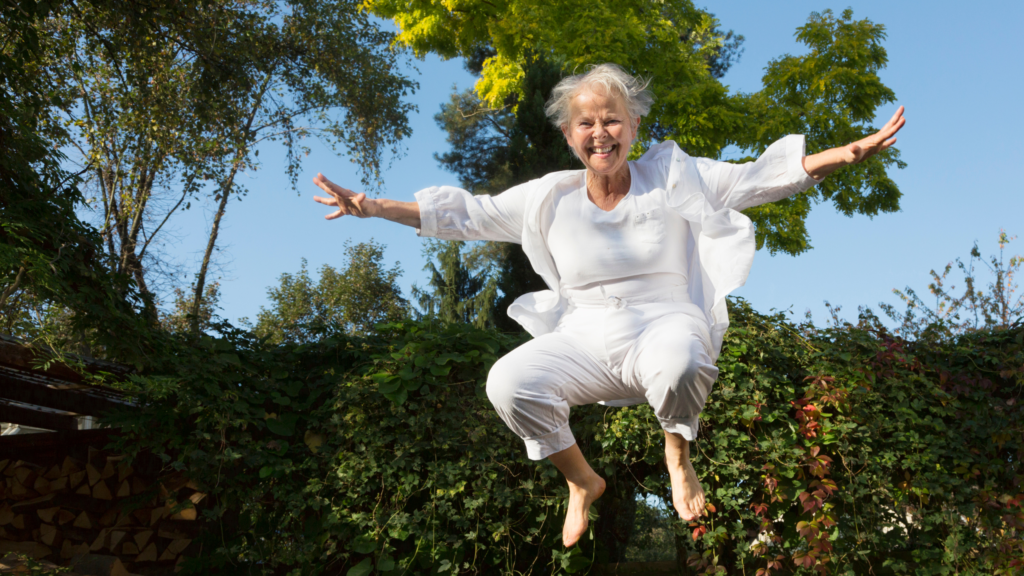
What happens to our bones as we age ?
As we age, our bones slowly begin to lose density because the natural balance between bone breakdown and bone formation shifts—around midlife, especially after the age of about 50, bone resorption (breakdown) starts to outpace bone formation. Hopkins Medicine+2Bone Health & Osteoporosis Foundation+2
For women in particular, the transition through Menopause accelerates this loss sharply: with the decline in estrogen, women may lose on the order of 1.8-2.3% of bone mineral density per year at the spine and about 1-1.4% per year at the hip during the 5-10 years surrounding menopause. Menopause Facts+2UCLA Health+2 In fact, women can lose up to 10–12 % of bone density in the hip and spine across the menopausal transition and as much as 20 % or more in the first five to seven years following menopause. UCLA Health+3Bone Health & Osteoporosis Foundation+3Better Health Channel+3 Over the longer span of life, by age 80, women on average have lost about 30% of their peak bone mass. Australasian Menopause Society
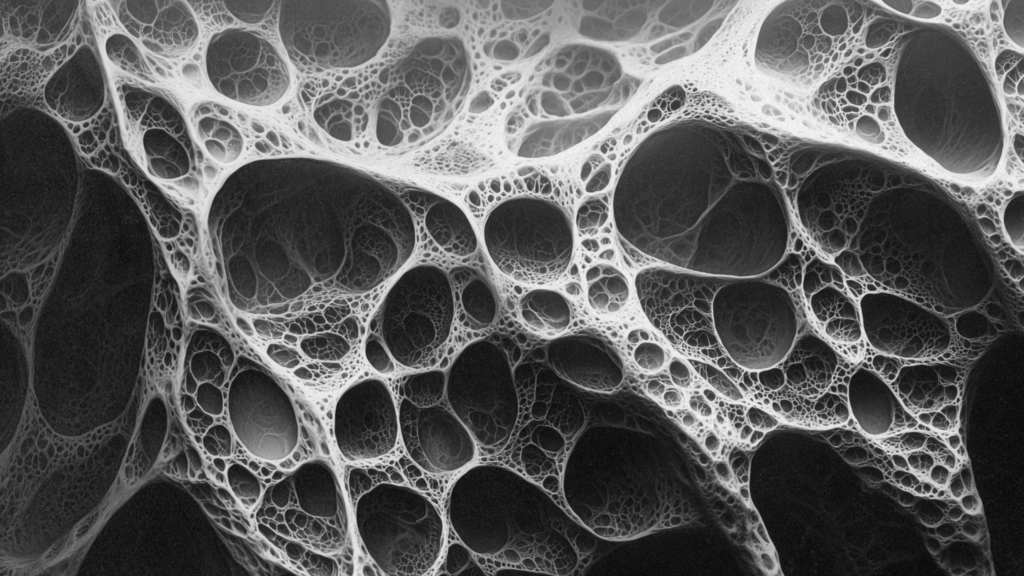
That means weaker structure, thinner bone walls, and larger internal “honeycombs” in the bone—all combining to raise the risk of osteopenia, then osteoporosis, and fractures. National Council on Aging+1
Understanding these numbers underscores why training the skeleton (heavy lifting, high-impact jumps, sprinting) and nutrition matter, especially for women in midlife.
What you can do to help bone density—jump training
One of the most effective and surprisingly simple ways to protect and even rebuild bone density is through jump training. Our bones respond to stress, and the impact from jumping sends a signal to your body to strengthen and fortify the skeletal structure.
This process, called mechanical loading, stimulates bone-forming cells (osteoblasts) to increase bone mineral density, particularly in the hips and spine, the areas most vulnerable to age-related loss. Research shows that short bouts of high-impact exercise, such as 10 minutes of jumping three times per week, can significantly improve bone density, even in women with osteopenia.
You don’t need to perform extreme plyometrics; simple hops, jump squats, or small bounding movements on a firm surface are enough to get results. The key is consistency and progression. Start with gentle impact and gradually increase intensity as your strength and confidence grow. Over time, these small but powerful sessions can help you maintain strong, resilient bones that support you for decades.

What happens to bones when continued stress is administered?
Bones respond by becoming stronger and denser through a process known as bone remodeling. This process is guided by Wolff’s Law, which states that bone tissue adapts to the loads under which it is placed.
The mechanical stress stimulates specialized cells called osteocytes, which then signal osteoblasts (bone-building cells) to lay down new bone matrix and osteoclasts to resorb older or weaker bone tissue.
Over time, this coordinated activity increases bone mineral density and improves structural strength. Studies published in journals like Bone and the Journal of Applied Physiology have shown that regular high-impact or resistance exercise can increase bone density by 1–3% annually in adults, a meaningful gain, especially when offsetting the typical age-related loss. In essence, consistent mechanical stress teaches your bones to stay strong, functional, and fracture-resistant well into later life.
Jump training can be incredibly beneficial, but it’s not suitable for everyone
at least not right away. Here’s who should avoid or modify jump training until properly cleared or conditioned.
People with joint pain or arthritis flare-ups: High-impact movements can aggravate knees, hips, or ankles that are already inflamed or unstable.
Those with osteoporosis or severe osteopenia: While impact can improve bone density, jumping without proper supervision or foundational strength can increase fracture risk.
Anyone recovering from injury or surgery: Especially if it involves the lower body, spine, or core — you need full strength, stability, and clearance from a medical professional first.
Individuals with balance or coordination issues: Falls during jump training can cause more harm than good; stability work should come first.
Beginners without strength training experience: Jumping should build on a foundation of strength — think of it as “level 2,” after you can squat, hinge, and land safely.
In short: jump training is powerful when done right, but it should be progressive, controlled, and tailored to your current ability. For many people, that means starting with low-impact drills, learning proper landing mechanics, and building from there.
Let's work together !
As a Certified Personal Trainer, I can help you safely integrate jump training into your fitness plan, customizing the intensity, frequency, and type of movement to suit your current fitness level and goals. Whether you’re starting from scratch or looking to build on your existing routine, I’ll guide you through proper form, progression, and recovery to maximize benefits while minimizing risk. A few minutes of intentional, high-impact work each week can make a remarkable difference in your long-term strength, stability, and vitality. Your bones thrive on challenge.
Let’s build that strength together.