
Exercise

workouts, science-based information, training, routines, exercise, movement, form

Know Your Gym Tools: The Kettlebell

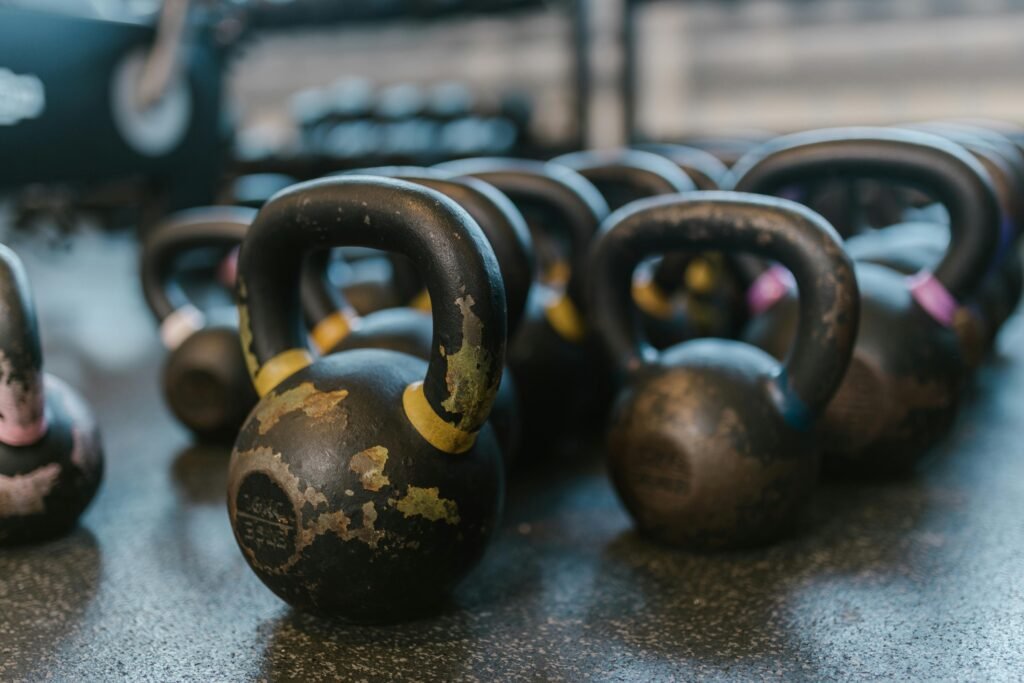
(Beginner’s Guide to Strength, Confidence, and Results) Walk into any gym, and you’ll probably see them sitting in a corner, heavy, round, and slightly intimidating. The kettlebell is one of the most powerful and misunderstood tools in the gym. If you’ve ever wondered what it does, how to use it, or whether it’s “for you,” this guide will show you everything you need to know to use kettlebells safely and confidently. Understanding is the first step towards gaining confidence in the gym. https://www.youtube.com/shorts/0hUYhfu4ohc What Is a Kettlebell? A kettlebell is a cast-iron or steel weight with a handle. Unlike dumbbells, the weight sits below the handle, creating an offset center of gravity. That simple design forces your body to stabilize more, engage your core, and move more naturally. This makes kettlebells incredibly effective for building: Strength Stability Coordination Endurance Functional, real-life movement You don’t need to lift heavy to benefit. Proper technique is what delivers results. The Origin of the Kettlebell The kettlebell traces its roots back to 18th-century Russia, where it was originally used as a counterweight for weighing grain in markets. These cast-iron weights, known as “girya,” were common tools for farmers and merchants. Over time, people began lifting and swinging them to demonstrate strength and physical ability, turning a simple measuring device into a training tool. By the 19th century, kettlebells had become part of physical conditioning programs for athletes and the military in Russia. In other words, kettlebells were accidental strength training. Today, they’re widely used in strength programs, functional training, and competitive fitness environments like CrossFit Games, but they remain one of the best tools for beginners. Why Kettlebells Are Great for Beginners Kettlebells teach your body to move as a unit instead of isolating muscles one at a time. They improve: Core stability Grip strength Posture Balance and coordination Total-body strength Unlike machines that guide your movement, kettlebells teach your body how to control movement—which transfers directly to everyday activities. They’re simple, efficient, and highly effective. What Makes Kettlebells Different From Dumbbells What truly sets kettlebells apart from dumbbells is the offset center of gravity. With a kettlebell, the weight sits below the handle rather than evenly balanced in your hands. This small design difference changes how your body works during each movement. Because the load is positioned away from your hands, kettlebells require more core engagement, challenge your stability, and encourage better coordination throughout the entire body. They also allow for more fluid, dynamic movements, like swings and cleans, that are difficult to replicate with dumbbells. While dumbbells tend to feel more controlled and predictable, kettlebells require greater body awareness and control, making them an excellent tool for developing strength, balance, and movement quality. How Kettlebells Train the 5 Fundamental Movement Patterns https://www.youtube.com/shorts/_eOFaLkon28 A single kettlebell can train your entire body by targeting the five primary movement patterns. 1. Hinge Examples: Deadlifts, swings Builds glutes and hamstrings Teaches proper hip movement Protects the lower back when done correctly 2. Squat Example: Goblet squat Improves posture and depth Strengthens legs and core Beginner-friendly positioning 3. Push Examples: Overhead press, floor press Builds shoulder strength Improves stability and control   4. Pull Examples: Rows, high pulls Strengthens upper back Improves posture 5. Carry Examples: Suitcase carry, front rack carry Develops core strength and grip Enhances balance and stability One tool. Full-body training. Kettlebells may look simple, but they’re one of the most versatile and effective tools you’ll find in the gym. Whether you’re learning the basics of strength training or looking to improve stability, coordination, and full-body power, kettlebells can help you build a strong foundation. You don’t need to master every movement right away or lift heavy to benefit. Start with the fundamentals, focus on good technique, and give yourself time to learn. The more familiar you become with the tools around you, the more confident you’ll feel walking into the gym—and that confidence is where real progress begins.  If you’re ready to start training but aren’t sure where to begin, I’m here to help. Whether you want guidance on proper form, building a beginner-friendly workout routine, or simply gaining more confidence in the gym, feel free to reach out. I offer personal training and support designed to help you learn the fundamentals, train safely, and feel stronger every step of the way. You can contact me using the information below to ask questions or schedule a session—I’d be happy to help you get started. Contact me

Know Your Gym Tools: The Kettlebell Read More »

Exercise
Jump Training: What is it and why you should do it (especially if you’re a woman in menopause)?

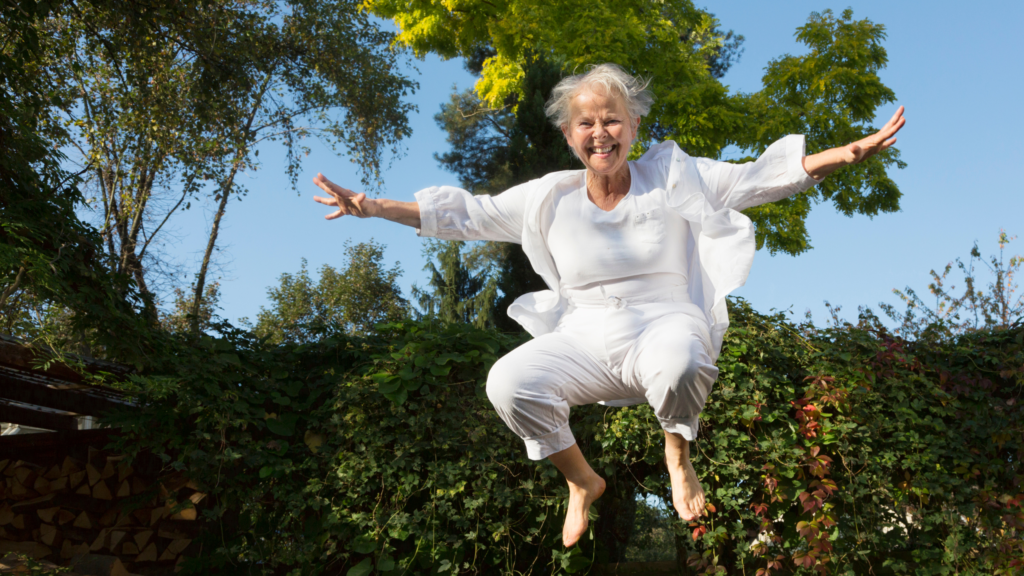
What happens to our bones as we age ? As we age, our bones slowly begin to lose density because the natural balance between bone breakdown and bone formation shifts—around midlife, especially after the age of about 50, bone resorption (breakdown) starts to outpace bone formation. Hopkins Medicine+2Bone Health & Osteoporosis Foundation+2 For women in particular, the transition through Menopause accelerates this loss sharply: with the decline in estrogen, women may lose on the order of 1.8-2.3% of bone mineral density per year at the spine and about 1-1.4% per year at the hip during the 5-10 years surrounding menopause. Menopause Facts+2UCLA Health+2 In fact, women can lose up to 10–12 % of bone density in the hip and spine across the menopausal transition and as much as 20 % or more in the first five to seven years following menopause. UCLA Health+3Bone Health & Osteoporosis Foundation+3Better Health Channel+3 Over the longer span of life, by age 80, women on average have lost about 30% of their peak bone mass. Australasian Menopause Society That means weaker structure, thinner bone walls, and larger internal “honeycombs” in the bone—all combining to raise the risk of osteopenia, then osteoporosis, and fractures. National Council on Aging+1 Understanding these numbers underscores why training the skeleton (heavy lifting, high-impact jumps, sprinting) and nutrition matter, especially for women in midlife. What you can do to help bone density—jump training One of the most effective and surprisingly simple ways to protect and even rebuild bone density is through jump training. Our bones respond to stress, and the impact from jumping sends a signal to your body to strengthen and fortify the skeletal structure. This process, called mechanical loading, stimulates bone-forming cells (osteoblasts) to increase bone mineral density, particularly in the hips and spine, the areas most vulnerable to age-related loss. Research shows that short bouts of high-impact exercise, such as 10 minutes of jumping three times per week, can significantly improve bone density, even in women with osteopenia.  You don’t need to perform extreme plyometrics; simple hops, jump squats, or small bounding movements on a firm surface are enough to get results. The key is consistency and progression. Start with gentle impact and gradually increase intensity as your strength and confidence grow. Over time, these small but powerful sessions can help you maintain strong, resilient bones that support you for decades. What happens to bones when continued stress is administered? Bones respond by becoming stronger and denser through a process known as bone remodeling. This process is guided by Wolff’s Law, which states that bone tissue adapts to the loads under which it is placed.  The mechanical stress stimulates specialized cells called osteocytes, which then signal osteoblasts (bone-building cells) to lay down new bone matrix and osteoclasts to resorb older or weaker bone tissue.  Over time, this coordinated activity increases bone mineral density and improves structural strength. Studies published in journals like Bone and the Journal of Applied Physiology have shown that regular high-impact or resistance exercise can increase bone density by 1–3% annually in adults, a meaningful gain, especially when offsetting the typical age-related loss. In essence, consistent mechanical stress teaches your bones to stay strong, functional, and fracture-resistant well into later life. Jump training can be incredibly beneficial, but it’s not suitable for everyone at least not right away. Here’s who should avoid or modify jump training until properly cleared or conditioned. People with joint pain or arthritis flare-ups: High-impact movements can aggravate knees, hips, or ankles that are already inflamed or unstable. Those with osteoporosis or severe osteopenia: While impact can improve bone density, jumping without proper supervision or foundational strength can increase fracture risk. Anyone recovering from injury or surgery: Especially if it involves the lower body, spine, or core — you need full strength, stability, and clearance from a medical professional first. Individuals with balance or coordination issues: Falls during jump training can cause more harm than good; stability work should come first. Beginners without strength training experience: Jumping should build on a foundation of strength — think of it as “level 2,” after you can squat, hinge, and land safely. In short: jump training is powerful when done right, but it should be progressive, controlled, and tailored to your current ability. For many people, that means starting with low-impact drills, learning proper landing mechanics, and building from there. Let’s work together ! As a Certified Personal Trainer, I can help you safely integrate jump training into your fitness plan, customizing the intensity, frequency, and type of movement to suit your current fitness level and goals. Whether you’re starting from scratch or looking to build on your existing routine, I’ll guide you through proper form, progression, and recovery to maximize benefits while minimizing risk. A few minutes of intentional, high-impact work each week can make a remarkable difference in your long-term strength, stability, and vitality. Your bones thrive on challenge.  Let’s build that strength together. Get Started

Jump Training: What is it and why you should do it (especially if you’re a woman in menopause)? Read More »

Exercise, Wellness

The Romanian Deadlift

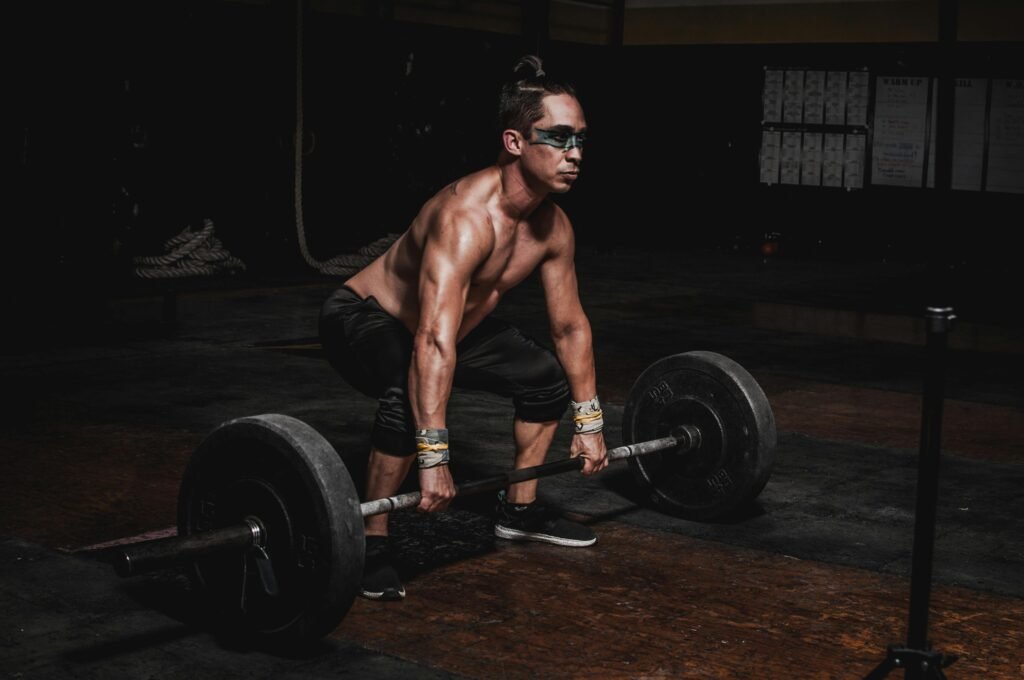
The Glorious, Slightly Theatrical History of the Romanian Deadlift. Once upon a gym in a time before Instagram clips of people pretending to “hip hinge,” a modest, efficient lift slithered out of Olympic weightlifting warm-ups and quietly changed the way humans moved heavy things. That lift is the Romanian deadlift, the RDL (my favorite of lifts): the hip hinge’s classy cousin who wears a tailored singlet and actually knows how to use its hamstrings. How it started (and why it’s named after Romania) The Romanian deadlift didn’t arrive with fanfare, neon lights, or a motivational playlist. It arrived with Nicu Vlad, an Olympic-weightlifting wizard from Romania, and his coach, Dragomir Cioroslan. In 1990, Nicu Vlad was training in the United States, either at the Olympic Training Center or at San Francisco’s famed Sports Palace gym (accounts vary). While preparing for the clean and jerk, he introduced a variation of the deadlift. Unlike the traditional version, which begins with the bar on the floor, Vlad started from a standing position and emphasized the eccentric, or lowering, phase of the lift. Vlad used a flat-backed, semi-stiff-legged pulling pattern as an accessory to make his clean stronger and his back resilient.  This technique kept a slight bend in the knees, a rigid, flat back, and a deep hip hinge. He lowered the bar to around mid-shin before driving back up to the start, maintaining constant muscle tension throughout. The purpose was clear: to build strength in the hamstrings and the entire posterior chain, key players in generating the explosive pulling power essential to Olympic lifting. Vlad Nicu During this coaching clinic, as the lift was demonstrated, folks took notes, Jim Schmitz (an American coach at the clinic) apparently asked what to call it, and someone said “Romanian deadlift.” The name stuck not because it’s mysterious or regal, but because it was practical and very, very effective. What the Romanian deadlift actually is (so you can stop pretending) https://www.youtube.com/watch?v=2bmuYtv4HbQ You do not “bend over and yank.” You hinge: push the hips back, keep the spine long, let the hamstrings whisper sweet tension into your legs, then stand tall by squeezing the glutes and locking the hips.  Compared to a conventional deadlift, the RDL usually starts at the top (you lower the bar from the rack or after a light descent) and emphasizes eccentric control and hamstring length under load.  It’s an accessory that builds the posterior chain like a small, benevolent machine that hands out single-serving packets of athleticism. Evolution and varieties — the deadlift family tree The deadlift universe is vast and dramatic. The Romanian deadlift sits on a plush but practical branch. Here’s the family reunion: Romanian Deadlift (RDL): Hip hinge, modest knee bend, big hamstrings, and back control. Great for posture, posterior-chain hypertrophy, and training the hinge without grinding out max pulls. Stiff-Legged Deadlift: Similar to the RDL but with less knee bend and more lumbar stretch. Dangerous if you treat it like a flexibility contest. Conventional Deadlift: Floor start, more knee bend, big quad-and-glute contribution. The classic heavy-lift test. Sumo Deadlift: Wider stance, more upright torso, shorter pull. Loved by lifters who enjoy tactical foot placement. Trap-Bar Deadlift: Pull from inside a hex bar — easier on the back, hip-dominant without as much lower-back torque. Snatch-Grip / Deficit / Rack Pulls: Variations that change range of motion, leverage, and weak points. All exist to make you better at some part of the lift (or to make your ego take a walk). Over the years, coaches borrowed cues from Olympic lifting, powerlifting, strongman, and even yoga. The RDL was quietly adopted by bodybuilders for hamstrings, by powerlifters for lockout strength, by athletes for hinge mechanics, and by Sunday lifters who wanted to show that they had a “posterior chain.” Progression has been practical: lighter, controlled reps for hypertrophy; heavier, tighter sets for strength and carryover to big pulls. Trapbar Deadlift World records? Yes. And they’re a spectacle. If you’re asking “who has lifted the heaviest deadlifts ever?” strap in — these are feats of human showmanship, science, and stubborn fascination with the question “what if we put everything on the bar?” The modern all-time men’s deadlift world record has been pushed into the half-ton club and beyond by strongmen who pull in suits, straps, on different bars (elephant bar, thick handles), and in both sanctioned competitions and exhibition attempts. Recently, Hafþór Júlíus Björnsson — yes, the Icelandic giant sometimes known as “The Mountain” — has been rewriting the record books with staggering pulls, including official competition lifts in the 500+ kg range. (There’s history here: previous milestones included Eddie Hall’s 500 kg, Andy Bolton’s equipped records, and more.) These lifts are part raw strength, part event setup, and part a very public negotiation with gravity. “The Mountain” Hafþór Júlíus Björnsson Lucy Underdown Women are absolutely deadlifters — make no mistake. The women’s deadlift has exploded in recent years as strongwomen and powerlifters push boundaries. Lucy Underdown (a standout in strongwoman circles) has repeatedly raised the bar for women’s deadlifting with world-record pulls in the 300+ kg range in strongwoman events (elephant bar and conventional arenas), while historic powerlifting names like Becca Swanson set massive equipped deadlifts years ago that still inspire debate and admiration. The point is: women lift heavy, break records, and make the rest of us reconsider our life choices mid-workout. Why you should care (benefits that aren’t just for flexing) The RDL and deadlifts in general are more than Instagram moments — they are movement patterns with huge carryover: Strength and hypertrophy: RDLs load the hamstrings, glutes, and spinal erectors in a way squats don’t, improving posterior-chain mass and strength.  Injury prevention: A well-trained hinge reduces lower-back injuries by teaching the hamstrings and glutes to do the work instead of the lumbar spine. Improved athleticism: Sprinting, jumping, and changing direction all require a powerful hip hinge. RDLs build the spring. Better posture and lumbar control: Eccentric control in the RDL strengthens the back through the range you need to resist

The Romanian Deadlift Read More »

Exercise
Scroll to Top