(Beginner’s Guide to Strength, Confidence, and Results)
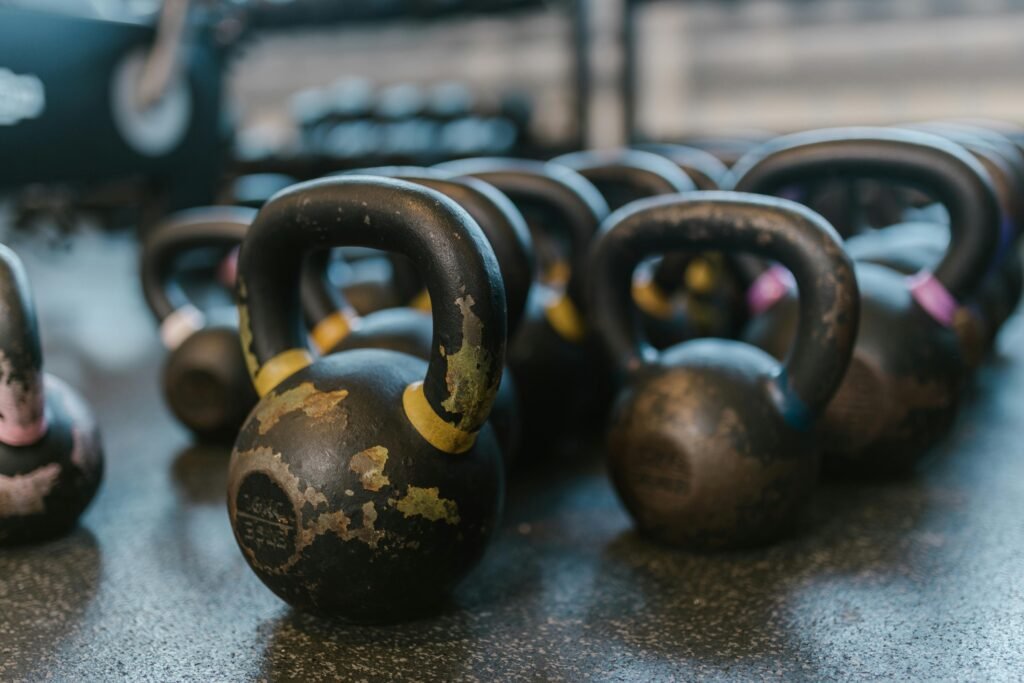
Walk into any gym, and you’ll probably see them sitting in a corner, heavy, round, and slightly intimidating. The kettlebell is one of the most powerful and misunderstood tools in the gym.
If you’ve ever wondered what it does, how to use it, or whether it’s “for you,” this guide will show you everything you need to know to use kettlebells safely and confidently.
Understanding is the first step towards gaining confidence in the gym.
What Is a Kettlebell?
A kettlebell is a cast-iron or steel weight with a handle. Unlike dumbbells, the weight sits below the handle, creating an offset center of gravity. That simple design forces your body to stabilize more, engage your core, and move more naturally.
This makes kettlebells incredibly effective for building:
Strength
Stability
Coordination
Endurance
Functional, real-life movement
You don’t need to lift heavy to benefit. Proper technique is what delivers results.
The Origin of the Kettlebell
The kettlebell traces its roots back to 18th-century Russia, where it was originally used as a counterweight for weighing grain in markets. These cast-iron weights, known as “girya,” were common tools for farmers and merchants.
Over time, people began lifting and swinging them to demonstrate strength and physical ability, turning a simple measuring device into a training tool. By the 19th century, kettlebells had become part of physical conditioning programs for athletes and the military in Russia.
In other words, kettlebells were accidental strength training.
Today, they’re widely used in strength programs, functional training, and competitive fitness environments like CrossFit Games, but they remain one of the best tools for beginners.
Why Kettlebells Are Great for Beginners
Kettlebells teach your body to move as a unit instead of isolating muscles one at a time. They improve:
Core stability
Grip strength
Posture
Balance and coordination
Total-body strength
Unlike machines that guide your movement, kettlebells teach your body how to control movement—which transfers directly to everyday activities.
They’re simple, efficient, and highly effective.
What Makes Kettlebells Different From Dumbbells
What truly sets kettlebells apart from dumbbells is the offset center of gravity. With a kettlebell, the weight sits below the handle rather than evenly balanced in your hands. This small design difference changes how your body works during each movement. Because the load is positioned away from your hands, kettlebells require more core engagement, challenge your stability, and encourage better coordination throughout the entire body. They also allow for more fluid, dynamic movements, like swings and cleans, that are difficult to replicate with dumbbells. While dumbbells tend to feel more controlled and predictable, kettlebells require greater body awareness and control, making them an excellent tool for developing strength, balance, and movement quality.
How Kettlebells Train the 5 Fundamental Movement Patterns
A single kettlebell can train your entire body by targeting the five primary movement patterns.
1. Hinge
Examples: Deadlifts, swings
Builds glutes and hamstrings
Teaches proper hip movement
Protects the lower back when done correctly
2. Squat
Example: Goblet squat
Improves posture and depth
Strengthens legs and core
Beginner-friendly positioning
3. Push
Examples: Overhead press, floor press
Builds shoulder strength
Improves stability and control
4. Pull
Examples: Rows, high pulls
Strengthens upper back
Improves posture
5. Carry
Examples: Suitcase carry, front rack carry
Develops core strength and grip
Enhances balance and stability
One tool. Full-body training.
Kettlebells may look simple, but they’re one of the most versatile and effective tools you’ll find in the gym. Whether you’re learning the basics of strength training or looking to improve stability, coordination, and full-body power, kettlebells can help you build a strong foundation.
You don’t need to master every movement right away or lift heavy to benefit. Start with the fundamentals, focus on good technique, and give yourself time to learn. The more familiar you become with the tools around you, the more confident you’ll feel walking into the gym—and that confidence is where real progress begins.
If you’re ready to start training but aren’t sure where to begin, I’m here to help. Whether you want guidance on proper form, building a beginner-friendly workout routine, or simply gaining more confidence in the gym, feel free to reach out. I offer personal training and support designed to help you learn the fundamentals, train safely, and feel stronger every step of the way.
You can contact me using the information below to ask questions or schedule a session—I’d be happy to help you get started.